ECOWAS Finalizes Framework to Drive Regional Digital Economy
The directive aims to establish a harmonized legal and regulatory framework to drive the growth and development of the digital sector across the region.
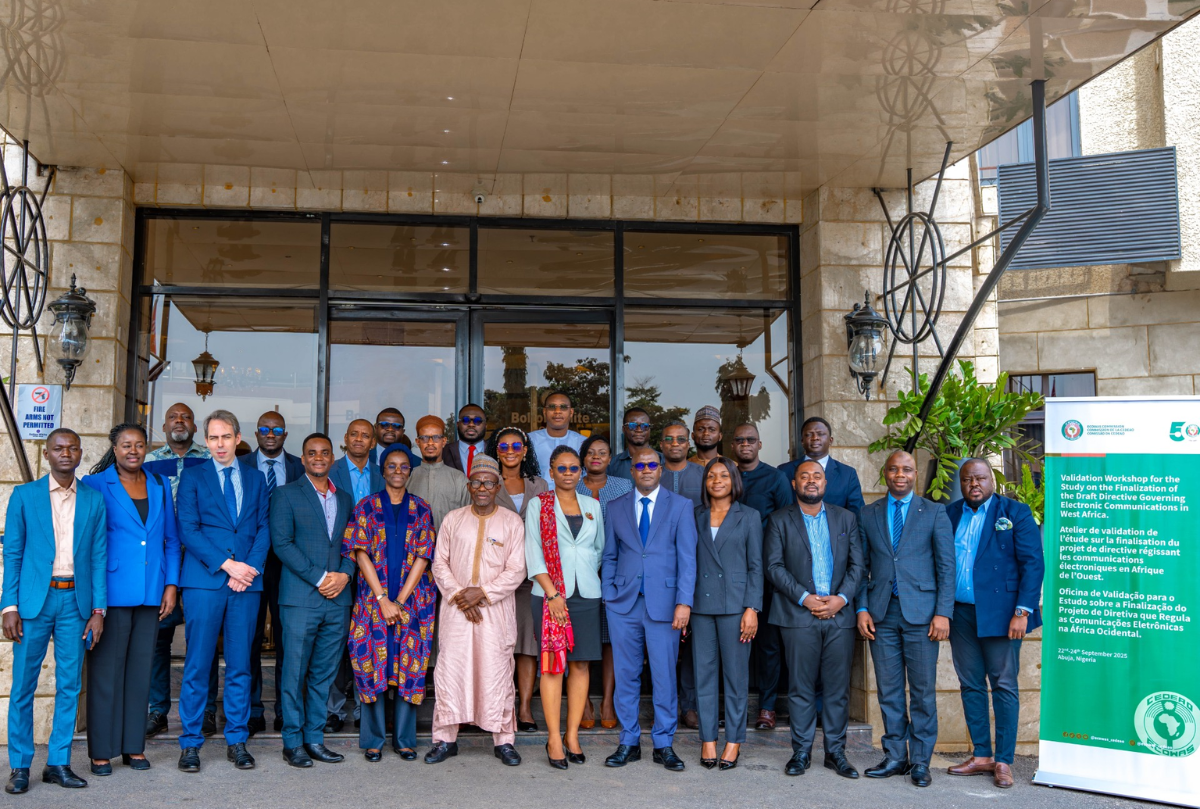
The ECOWAS Commission through its directorate of digital economy and post is holding a three-day validation workshop from September 22nd to 24th, 2025, in Abuja, Nigeria, to finalize the Draft Directive Governing Electronic Communications in West Africa. The directive aims to establish a harmonized legal and regulatory framework to drive the growth and development of the digital sector across the region.
The workshop, chaired by the representative of the Ministry of Communications Technology and Innovation of Sierra Leone brought together key stakeholders, including representatives from the Ministries in charge of ICT and Digitalization, national regulatory authorities of ECOWAS Member States, and the WAEMU Commission. The meeting was inaugurated by Ms. Folake Olagunju, Acting Director of the Digital Economy and Post, who delivered the statement on behalf of the ECOWAS Commissioner for Infrastructure, Energy, and Digitalization, Mr. Sédiko Douka.
Ms. Olagunju highlighted the transformative potential of the digital economy for West Africa, emphasizing that electronic communications are its backbone. She stressed the importance of a coherent, forward-looking regulatory system to encourage investment and foster innovation. The draft directive is the culmination of an inclusive process that began in 2019 under the coordination of the WAEMU Commission, involving extensive national consultations with stakeholders across member states. The final draft reflects a broad spectrum of aspirations and expectations from the region.
Acknowledging the partnership with WAEMU and commending its leadership in the initial stages of this initiative. The presence of UEMOA’S representative at the workshop was cited as a testament to the strong collaboration and shared vision for the region. Recognizing the vital support of the World Bank through the Western Africa Regional Digital Integration Program (WARDIP) which aims to expand broadband access and promote digital market integration across West Africa.
The workshop’s agenda included refining the draft, ensuring alignment with member states’ priorities and building consensus for its ministerial approval. In her address, Ms. Olagunju also shared that the Commission is actively preparing initiatives to address other critical digital issues identified during consultations, such as Artificial Intelligence, Facial Recognition, Cybersecurity, Personal Data, and Digital Platforms. She concluded by urging that participants actively participate and engage, as the strength of this framework will be shaped by the depth of the inputs which would go on to lay the foundation for a resilient, innovative and inclusive digital future for West Africa.