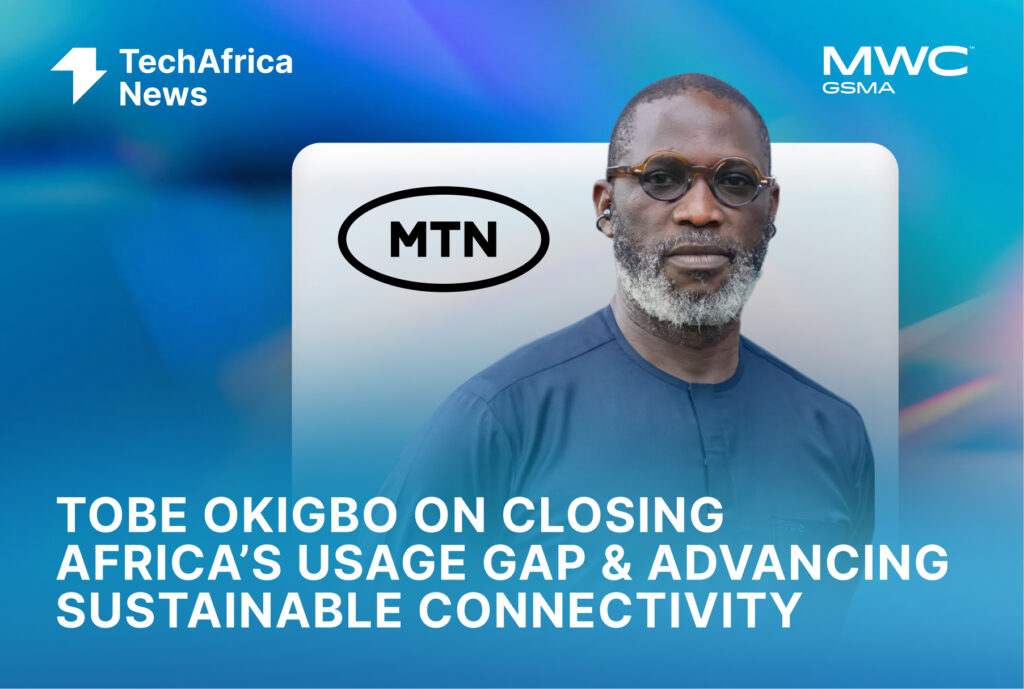
MTN’s Tobe Okigbo on Closing Africa’s Usage Gap and Advancing Sustainable Connectivity
At MWC Kigali 2025, the conversation around Africa’s digital future continues to shift from simple coverage to real, meaningful inclusion. Speaking with Tobe Okigbo, Chief Corporate Services and Sustainability Officer at MTN Nigeria, the spotlight turned to two challenges that still define Africa’s connectivity landscape. These are the affordability of devices and the urgent need to close the usage gap, even in communities that already live under network coverage.

- 00:26Affordability as the Core Barrier to Inclusion
- 2:00Infrastructure and Device Costs as a Combined Challenge
- 3:254G as the Minimum Standard for True Inclusion
- 4:36Closing the Usage Gap and Rethinking Digital Literacy
- 6:12Youth Innovation, Climate Action, and Sustainability Programs
- 7:50Public–Private Partnerships and Shared Value Models
Inclusion Begins with Affordability
Tobe explained that Africa’s progress will depend on solutions that bring people online in a practical and sustainable way. Affordability remains the core barrier. MTN is approaching this through its CHASE strategy, which focuses on handset cost, service bundling, and making everyday connectivity accessible for the lowest income groups.
Nigeria already sits at about 87 percent 4G coverage, yet more than half of MTN’s customers do not use the internet consistently. This is the heart of the usage gap. People are covered by the network but cannot benefit from it because the devices remain out of reach. Tobe made it clear that true inclusion depends on solving this single issue at scale.
Infrastructure and Devices Must Move Together
Asked whether infrastructure or affordability should come first, he pointed to a fully integrated approach. Every new base station, he argued, should arrive as 4G by default. Africa has repeatedly shown that demand is always stronger than expected once access is provided.
Digital literacy concerns are also shifting. With the rise of advanced language models that can communicate in local languages, Tobe noted that many barriers associated with digital skills are beginning to dissolve. If people can interact with technology in their own languages, adoption increases naturally.
Sustainability Requires Shared Action
The discussion then shifted to sustainability, viewed both through the lens of climate action and ESG commitments. Tobe emphasised that the private sector must become more intentional about working with governments to advance national goals.
A strong example is MTN’s engagement with young innovators across Africa through programs that develop climate-focused, scalable solutions. Another is MTN’s partnership with NiMeT, Nigeria’s meteorological agency. This collaboration brings real-time weather information to farmers and citizens, even through basic feature phones. It shows how shared value can create immediate impact when public institutions and private companies work with aligned purpose.
“When people hear the word sustainability, the first thought often goes to climate change. Others interpret it through the broader ESG lens that includes environmental, social, and governance considerations. However, sustainability should extend beyond these categories. The private sector has a responsibility to work deliberately and intentionally with government. This collaboration is essential not only for the sustainability of the industry itself, but also for the long-term stability of the ecosystem in which we all operate.”
– Tobe Okigbo, Chief Corporate Services and Sustainability Officer, MTN Nigeria
What Must Change Now
Public-private dialogue has long been part of Africa’s digital narrative. However, Tobe believes the next leap requires a cultural shift. Corporations must adopt greater humility, listen more closely to governments, and focus on areas where their work can directly support national priorities. True sustainability emerges when private ambition and public policy meet in the middle and build around the needs of local communities.