$3.5bn Spectrum Deal Marks New Era for Egypt’s Digital Infrastructure
The minister framed the agreement as a key step in advancing the Digital Egypt strategy, which is built on four main pillars.
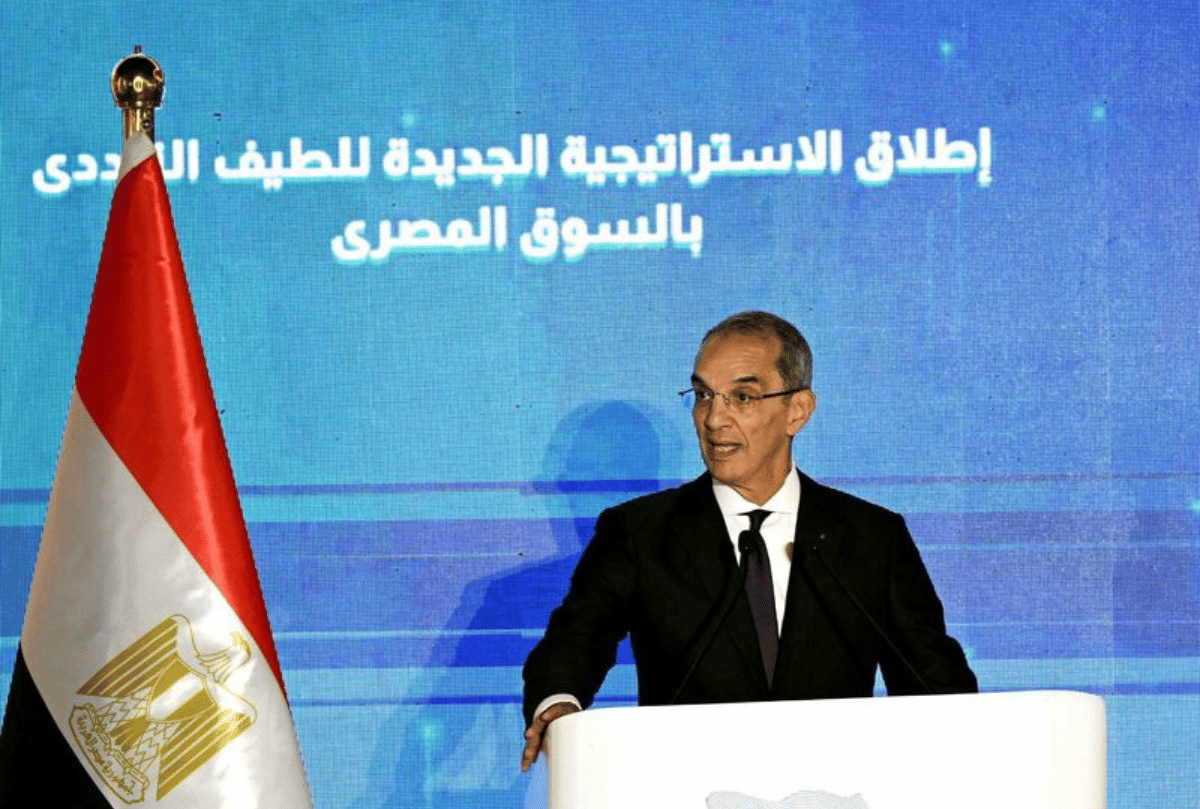
Egypt’s Minister of Communications and Information Technology , Amr Talaat, has described the signing of a landmark spectrum agreement as a historic turning point for the country’s telecom sector, marking the largest spectrum deal since the launch of mobile services in Egypt. The agreement was formalized during a ceremony organized by the Ministry of Communications and Information Technology (MCIT) in the presence of Prime Minister Mostafa Madbouly.
Speaking at the event, Talaat said the deal provides mobile network operators with an additional 410 MHz of spectrum, an amount equivalent to the total allocated over the past three decades. Valued at nearly $3.5 billion, the agreement represents more than one-third of the total investments attracted by Egypt’s ICT sector during that period. He noted that the sector has drawn around $10 billion in spectrum capacity and operating license investments over the past thirty years.
The minister framed the agreement as a key step in advancing the Digital Egypt strategy, which is built on four main pillars. The first focuses on building digital skills to help citizens access job opportunities in the digital economy. Talaat said MCIT is expanding its capacity-building programs with a goal of training 800,000 individuals during the current fiscal year, a significant rise compared to 2018 levels. He stressed that digital skills are now essential for participating in global markets, freelancing platforms, and national digital projects.
The second pillar centers on improving access to efficient digital government services. Talaat said digital transformation efforts are reshaping public service delivery, broadening service channels, and enhancing government efficiency. He highlighted that the Digital Egypt platform, launched in 2022, now offers more than 210 services through collaboration between MCIT, other state entities, and private sector partners, with further expansion planned to support a more participatory and paperless government.
According to Talaat, the third pillar involves leveraging artificial intelligence and emerging technologies to drive economic and social development. He said applied AI projects will be showcased at the first AI Everything Middle East and Africa Summit scheduled for February 11, underlining the government’s push to translate technological advances into practical development outcomes.
The fourth pillar aims to position the ICT sector as a major economic driver. Talaat said the industry has attracted 240 multinational companies exporting digital services from Egypt, creating over 170,000 jobs. The sector’s contribution to GDP has risen to more than 6%, up from 3.2% in 2018, while digital exports have grown by over 120% since 2018 to reach $7.4 billion in 2025, with a target of $9 billion.
Talaat emphasized that strong digital infrastructure underpins the Digital Egypt vision. He said the state has invested nearly $6 billion in recent years to develop mobile networks, improve fixed internet efficiency, and expand coverage nationwide. Of this, $3.5 billion went into upgrading the fixed landline network, helping drive a 16-fold increase in average internet speeds since 2019 and maintaining Egypt’s top ranking in Africa for fixed broadband speed for more than five years.
He explained that mobile network development followed two tracks: expanding the number of cell towers and stations, which have doubled since 2019, and increasing spectrum capacity. Before 2019, mobile operators had access to 272 MHz of spectrum. Between 2019 and 2022, an additional 140 MHz was allocated, bringing the total to 412 MHz. With the current deal, the total spectrum made available since 2019 rises to 550 MHz, marking what he described as an unprecedented expansion in Egypt’s spectrum management history.
Talaat said the expanded spectrum builds on the June 2025 launch of 5G services, ensuring networks are prepared for future applications. He stressed that the agreement is a long-term strategic move rather than a technical step, reflecting close alignment between the state and private sector to reshape Egypt’s telecom infrastructure.
The minister expressed appreciation to the Prime Minister for supporting the ICT investment environment, and thanked the Egyptian Armed Forces and other national institutions for their roles in the process. He also acknowledged mobile network operators for their continued investments and the National Telecom Regulatory Authority, led by Executive President Mohamed Shamroukh, for fostering a regulatory environment that supports digital infrastructure development.