UNESCO Launches Mobile Learning Initiative for Teachers in South Sudan
Through a platform designed for low-data and offline use, teachers will be able to access self-paced courses, learning resources and peer-learning networks regardless of location.
In South Sudan, where crises, distance and limited infrastructure can make teacher training difficult, a new mobile learning initiative from UNESCO and its International Institute for Capacity Building in Africa is helping bring professional development closer to educators.
As South Sudan works to improve teaching and learning outcomes across the country, expanding access to continuous professional development for teachers is a priority. Many educators, particularly those in remote and underserved areas, have limited opportunities to participate in regular training due to distance, time constraints and economic pressures. These barriers often affect women educators disproportionately.
To help address these gaps, UNESCO, through its International Institute for Capacity Building in Africa (IICBA), organized a three-day workshop in Juba from 17–19 June to launch the rollout of a new mobile-based teacher professional development initiative in South Sudan, with a particular focus on empowering women school leaders and teachers.
“When we empower our teachers, we empower the next generation. We appreciate this support for our educators which will expand access to professional development opportunities across South Sudan.”
– David Lowela Modi Lodu, Acting Undersecretary, Ministry of General Education and Instruction, South Sudan
The workshop brought together education officials from the Ministry of General Education and Instruction and teacher educators from universities and training institutions as part of a one-year project supported by the Government of Japan and being implemented across five African countries: Algeria, Cameroon, Kenya, Nigeria and South Sudan.
The Government of Japan firmly believes that investing in teachers is one of the most effective ways to improve educational outcomes and support national development. We are proud to support initiatives that empower educators, strengthen institutions, and promote equitable access to quality education.
Aya Oguri, Head of Cooperation and Development at the Embassy of Japan in South Sudan
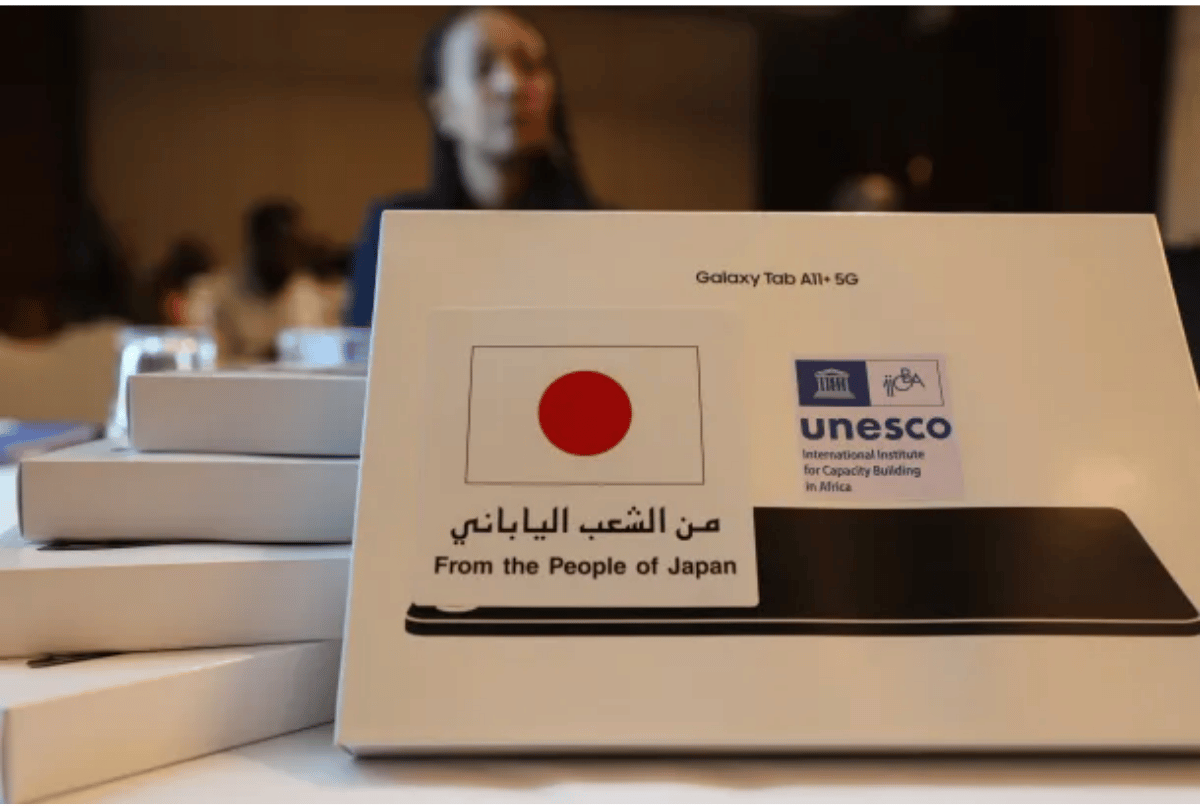
The initiative uses mobile technology, supported by edge computing systems, to expand access to professional learning opportunities. Through a platform designed for low-data and offline use, teachers will be able to access self-paced courses, learning resources and peer-learning networks regardless of location. Forty tablets were also provided to participants to support the rollout of the program.
“The success of this initiative will not be measured by the number of tablets distributed or the number of trainings conducted. Its true success will be reflected in how effectively you cascade the knowledge acquired, how many teachers continue to engage with the learning platform, how well you support your peers, and ultimately how many children benefit from improved teaching and learning in classrooms across South Sudan.”
– Yayoi Segi-Vltchek, Head of Office, Representative to South Sudan, UNESCO
During the workshop, participants explored approaches for supporting teacher engagement and inclusive participation. As Master Trainers, they will now support the rollout of the program within their institutions and help expand its reach across the country.
“The training is very relevant for me, and for my students. Internet connectivity and access to devices can be major challenges. This platform will help streamline my work and help us to reach more students. We will need continued support as the rollout progresses.”
– Jane Keji, Geography Lecturer, University of Juba
Similar opportunities were highlighted by Natale Majok Lual, Principal of Aweil-Maper Teacher Training Institute in Northern Bahr el Ghazal State. He travelled to Juba for the workshop alongside his colleague Marco Thiep Malek, an ICT tutor. More than 340 current and future teachers are currently enrolled at the institute, which provides both pre-service and in-service teacher training.
“Teachers face a lot of challenges in South Sudan. There simply are not enough teachers, for a start. The economic crisis, lack of salaries, and sheer distance to school is forcing many to leave the profession. Some don’t have access to digital equipment, which is needed in today’s world. This training and project will help introduce our teachers to digital learning and new possibilities and help ease some burdens. For some who cannot travel to the institute regularly, they will now be able to learn online.”
– Natale Majok Lual, Principal, Aweil-Maper Teacher Training Institute in Northern Bahr el Ghazal State
By expanding access to quality professional development opportunities, the initiative aims to support teachers and school leaders, strengthen teaching practices, and contribute to more inclusive, equitable and accessible learning opportunities for children and young people across South Sudan.
The project is implemented by UNESCO-IICBA with financial support from the Government of Japan, in partnership with the Pan African Virtual and Electronic University (PAVEU) initiative of the African Union’s Pan African University. The technology, including the edge computing system, is supported by the company Castalia Co., Ltd.