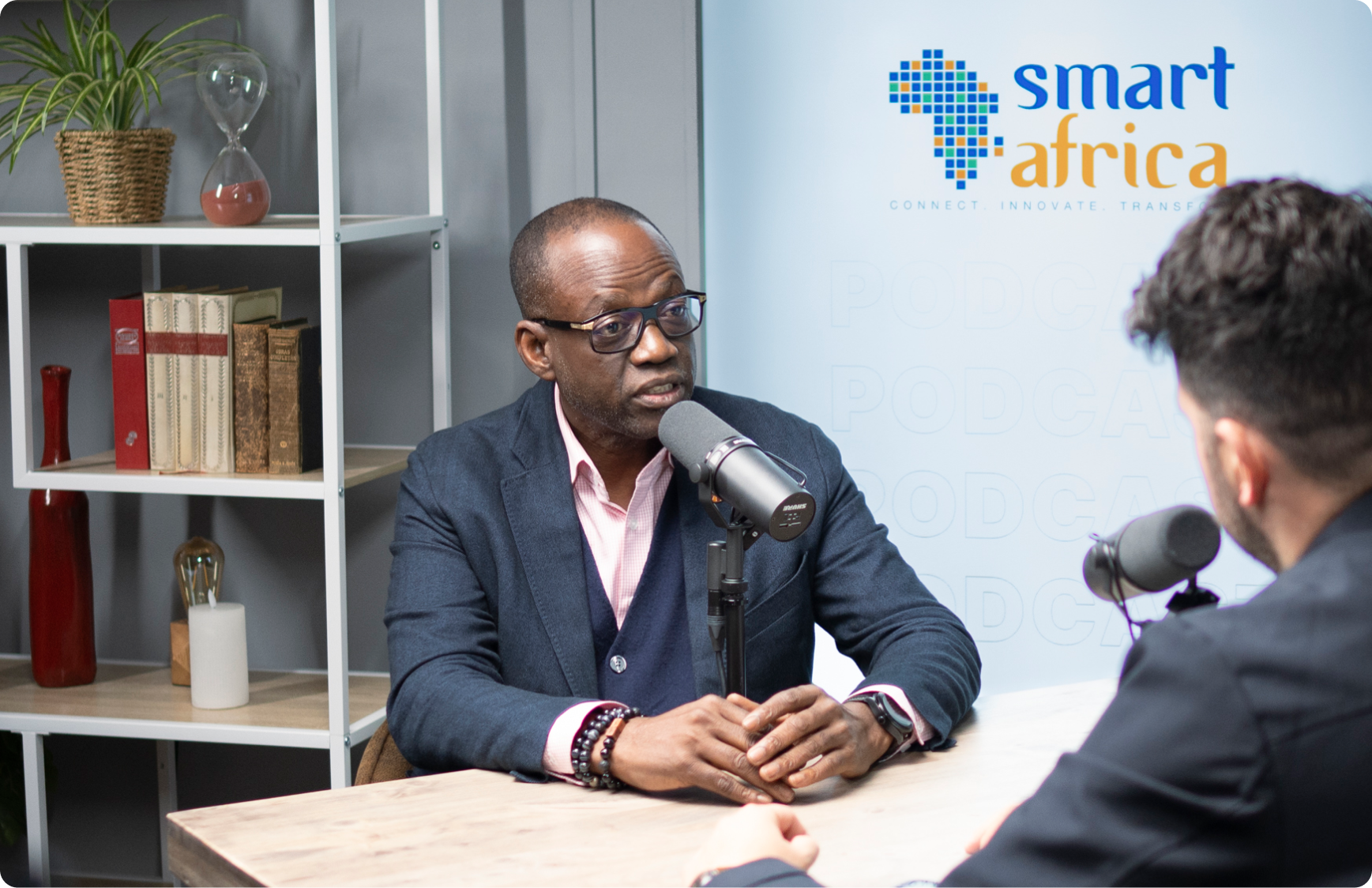
EP.06 | S2 | Beyond Borders: Minister George on Regulatory Harmonisation, AI and Africa’s Collective Digital Future
Can Africa’s digital future be built country by country, or does it require a continental mindset?
In this TechAfrica News podcast episode, Hon. Samuel Nartey George, MP, Ghana’s Minister for Communications, Digital Technology and Innovations, sat down with Akim Benamara, Founder of TechAfrica News, on the sidelines of MWC 2026 in Barcelona to discuss the policy, infrastructure, and talent priorities shaping Africa’s digital future.
The conversation explored everything from legislative reform and AI readiness to regional digital trade, data sovereignty, digital skills development, and the role of governments in preparing citizens for an AI-driven economy. At the center of the discussion was a simple but ambitious idea: Africa’s digital transformation will accelerate only when countries move beyond national boundaries and begin building with the continent in mind.
From cross-border collaboration and regulatory harmonization to AI infrastructure and workforce development, the discussion highlighted the practical steps African governments must take to unlock digital growth at scale.
- 00:00 Ghana's Digital Vision & the Case for a Pan-African Policy Framework
- 05:53 Collaboration Over Competition: AI Hubs, Bilateral Deals & Continental Harmonisation
- 13:14AI, Jobs & Data Sovereignty: Africa Must Own Its Intelligence Economy
- 19:00Youth, Creativity & the AfCFTA: Turning Africa's Bulge into a Digital Dividend
- 25:07 Regulation as Enabler: Sandboxes, Implementation & the AU's Execution Gap
- 29:01Africa's Next Five Years: Precision Policy, Inclusive AI & Reasons for Optimism
Digital Transformation Starts with Policy Reform
For Minister George, technology is no longer a standalone sector. It underpins agriculture, healthcare, education, security, and economic development.
One of his first priorities was addressing outdated legislation that no longer reflected today’s digital realities. Ghana’s ongoing review of technology-related laws aims to create an environment where innovation can thrive while maintaining the safeguards needed to protect citizens and businesses.
The goal is simple: position Ghana not only as a consumer of technology, but as a creator of African solutions for African challenges.
Building an African Framework for Digital Growth
A key theme throughout the discussion was the need for greater alignment across Africa’s digital policies. Minister George pointed to frameworks such as the AU Digital Transformation Strategy and the Malabo Convention as important benchmarks for national legislation, not to be adopted wholesale, but selectively, to reflect each country’s priorities while building toward continental coherence.
For Ghana, that vision is already taking shape: from a $250 million AI computing centre designed to serve innovators across the continent, to large language models being built in Yoruba, Hausa, Swahili and Creole alongside Ghanaian languages. The message is clear. African countries must stop building exclusively for domestic markets. Ghana’s 33 million people are a starting point, not a ceiling, and the solutions being developed today are intended to scale across a continent of 450 million in West Africa alone.
AI Readiness Is Really About Skills
While concerns about job displacement remain, Minister George argues that AI’s impact will ultimately depend on how well countries prepare their workforce.
Through initiatives such as DIGSMART and the One Million Coders programme, Ghana is investing in AI, cybersecurity, cloud computing, and digital skills training. The focus is not on resisting technological change, but on equipping citizens to benefit from it.
For Ghana, AI readiness begins with people.
“I’ve seen a study that says that between 2025 and 2030, there are going to be 96 million jobs that are going to be lost to AI. However, that same study says that there are going to be about 132 million new jobs created by AI. So AI is going to create a net positive when it comes to jobs. But the question here is this: how do we prepare our people who are going to be affected by the job losses to take advantage of the new kinds of jobs that are going to come? Because I keep saying that the solutions to Africa’s problems are in the streets of Accra and Nairobi and Lusaka. They’re not in the streets of Barcelona or London or San Francisco. We just need to give agency to our young people to grow the solutions that they have for our problems.”
– Hon. Samuel Nartey George, MP, Minister for Communications, Digital Technology and Innovations, Ghana
Africa’s Untapped Asset: Data
Data sovereignty emerged as another major theme of the discussion.
Minister George argues that Africa possesses one of the world’s most valuable yet underutilized digital resources: its data. As global AI systems increasingly require diverse datasets, African countries have an opportunity to create value by organizing, digitizing, and governing their own information assets.
The priority, he says, is ensuring that African data remains under African control and delivers value back to African economies.
Digital Trade Needs Regulatory Clarity
Another major topic was the role of regulation in accelerating cross-border digital trade.
Minister George pointed to the African Continental Free Trade Area and the AU’s digital frameworks as important foundations for greater interoperability between African markets.
However, he argued that implementation remains the missing piece.
African technology companies often face repeated licensing requirements and regulatory processes when entering new markets. Harmonized frameworks and mutual recognition mechanisms could significantly reduce these barriers, making it easier for innovators to scale across the continent.
From Frameworks to Action: Africa’s Next Digital Priorities
Looking ahead, Minister George believes Africa’s priorities should focus on AI readiness, digital skills, and inclusion. From agriculture and healthcare to education and financial services, technology can help address some of the continent’s biggest challenges.
But Africa does not lack strategies or frameworks. What is needed now is implementation. For Minister George, the continent’s digital future will depend on its ability to turn shared ambitions into practical outcomes.
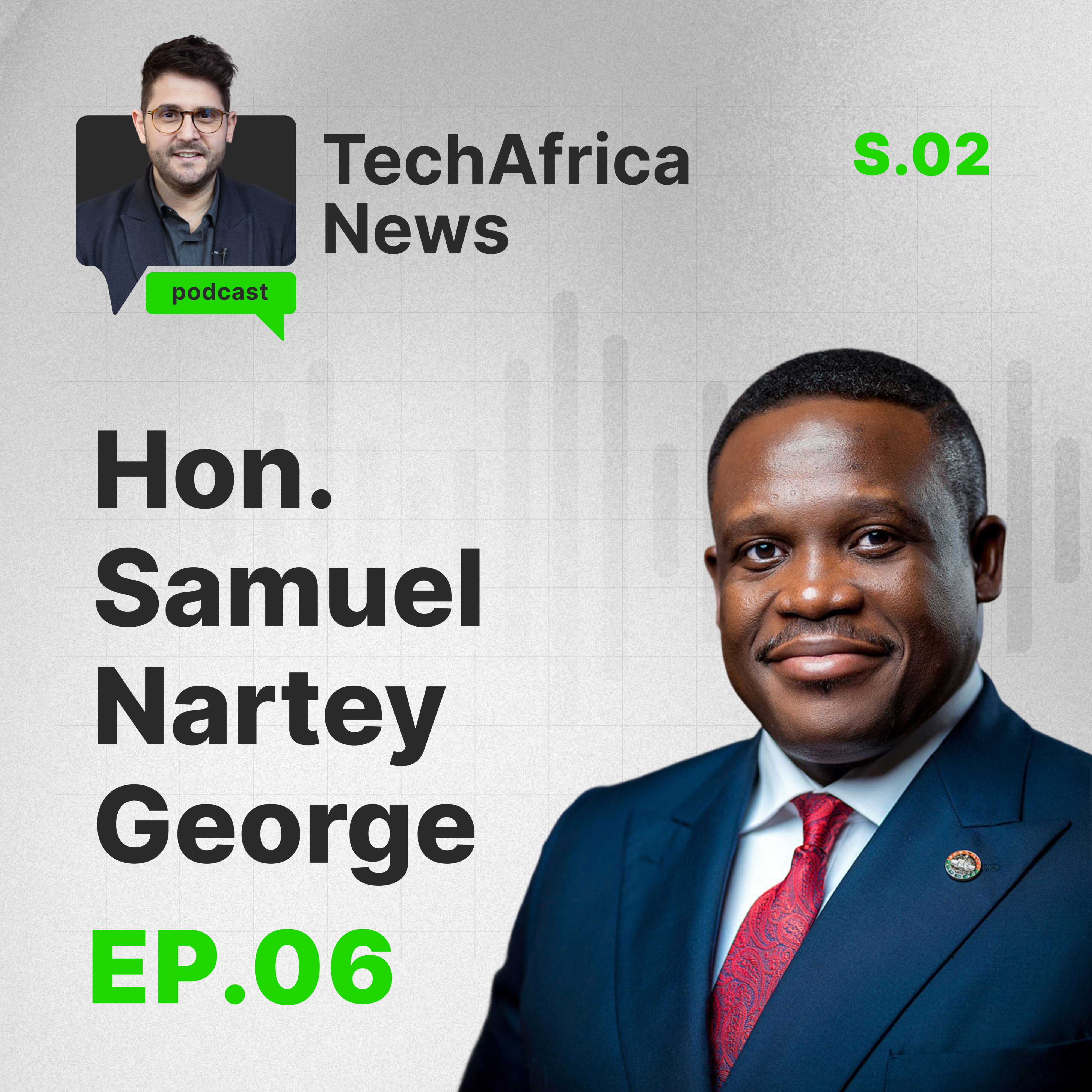
Hon. Samuel Nartey George is a Member of Parliament and Ghana’s Minister for Communications, Digital Technology and Innovations. He holds an MSc in International Strategy and Diplomacy from the London School of Economics, an MA in Conflict, Peace and Security from the Kofi Annan International Peacekeeping Training Centre, and an LLB from the University of London, bringing a rare combination of legal, diplomatic and technical expertise to his role.
As minister, he is leading an ambitious overhaul of Ghana’s ICT legislation and driving a continental vision for African-owned AI infrastructure, data sovereignty and digital skills development. A firm believer that Africa’s solutions must be built by Africans for Africans, he is one of the continent’s most outspoken voices on the future of the digital economy.