Resilience, Routing and Data Sovereignty in African Networks
At ITW Africa in Nairobi, digital infrastructure leaders argued that true network resilience requires moving past paper redundancy to build integrated cross-border terrestrial routes, transparent physical paths, and pragmatic regional regulatory frameworks.
Recent subsea cable outages have exposed the limits of redundancy that exists largely on paper. A network may have access to multiple cables, providers or routes, yet still depend on the same landing station, terrestrial corridor or cross-border connection. When that shared path fails, the alternatives can disappear with it.
The issue reaches beyond the physical network. Traffic crossing national borders can face regulatory and commercial barriers, while the cost of building genuinely independent routes makes resilience an economic as much as a technical challenge. At the same time, growing demands around data sovereignty are forcing businesses and governments to pay closer attention to where data travels and who controls the infrastructure carrying it.
These questions came into sharp focus at ITW Africa 2026 in Nairobi, where digital infrastructure leaders examined what it will take to build networks that can withstand disruption, reroute traffic across borders and support Africa’s growing digital economy.
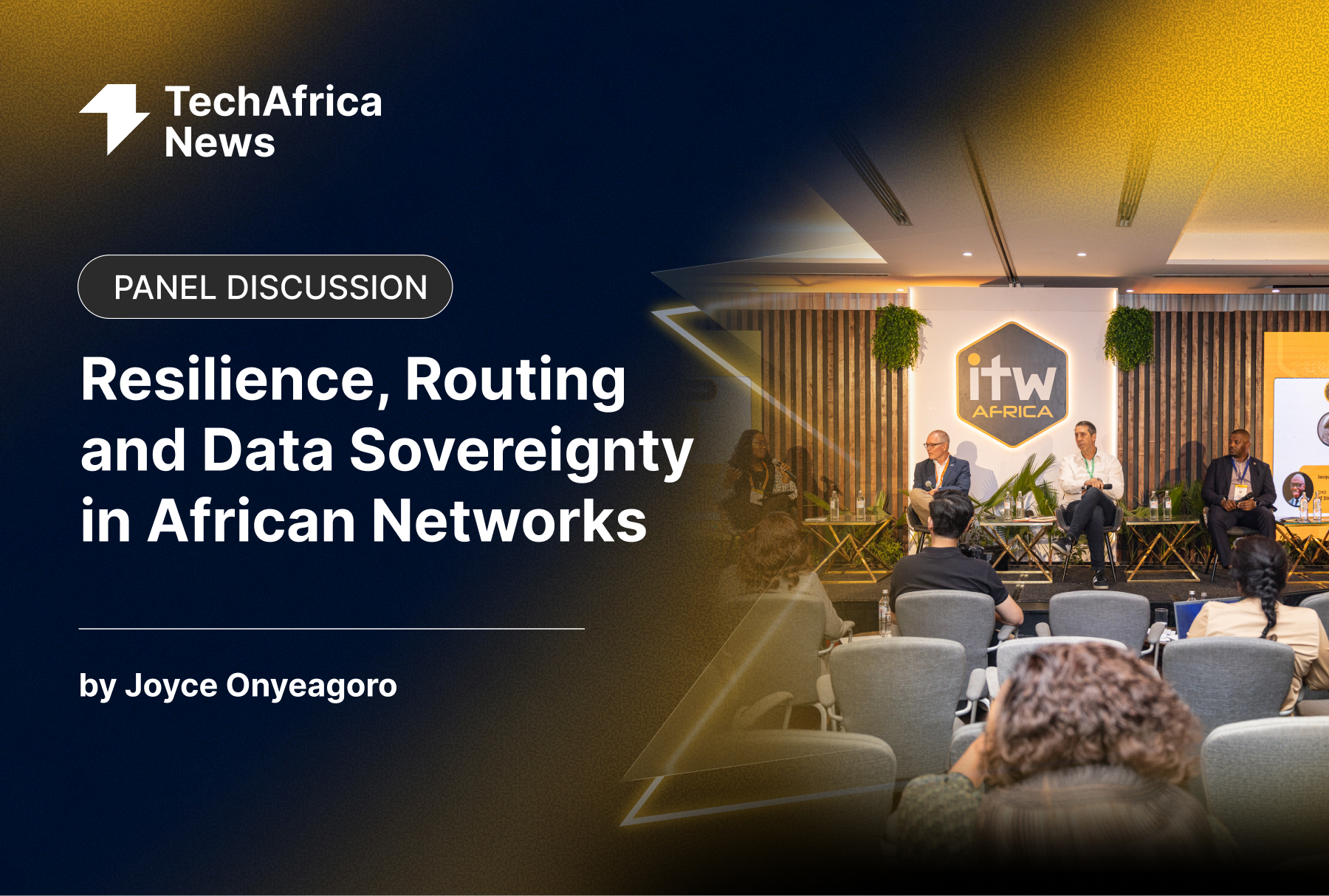
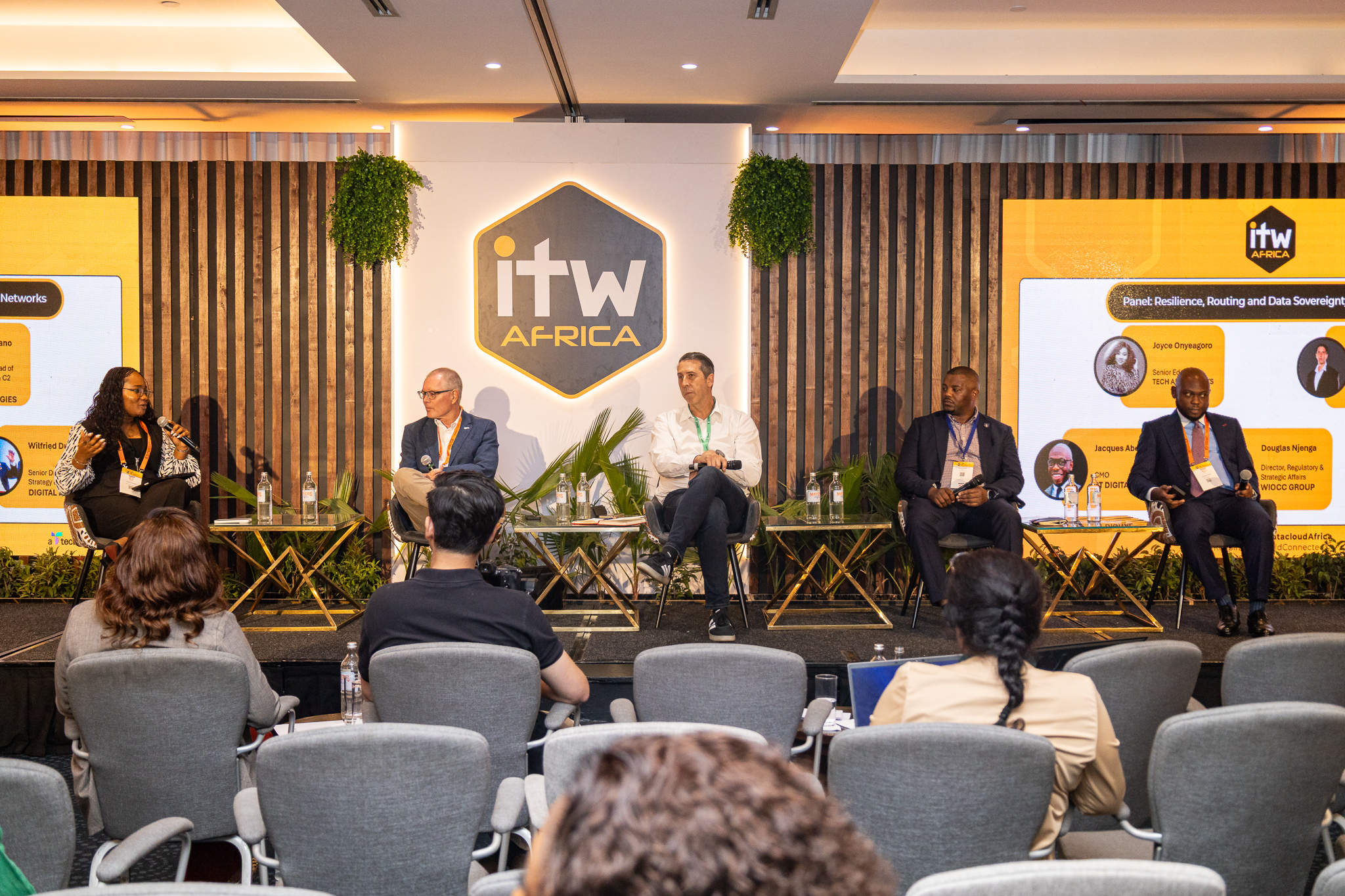
As an Official Media Partner for ITW Africa 2026, TechAfrica News joined the conversation, with Senior Editor Joyce Onyeagoro moderating the panel, “Resilience, Routing and Data Sovereignty in African Networks.” She was joined by Jacques ABENG, CMO, ST Digital; Douglas Njenga, Director, Regulatory & Strategic Affairs, WIOCC; Wilfried Dudink, Senior Director, Strategy and Development, Digital Realty; and Marco Gagiano, VP: Global Head of Connectivity & C2, Cassava Technologies.
The discussion moved from recent subsea outages to the terrestrial routes, cross-border regulation, infrastructure economics and physical network visibility that will determine how resilient Africa’s digital infrastructure really is.
When Multiple Routes Still Lead to the Same Failure
The recent subsea cable outages provided the clearest test of whether Africa’s networks are actually resilient. The problem, the panel argued, was not simply that cables were damaged. It was that alternative paths were often unable to take over traffic when those failures occurred.
This is where Wilfried Dudink anchored the discussion, pointing to the critical lack of sufficiently developed terrestrial routes connecting cable landing points to neighbouring markets. In markets with mature connectivity ecosystems, multiple cable landings are supported by cross-connects and terrestrial routes that allow traffic to move seamlessly between systems when one fails. Africa, he noted, has not yet achieved that level of redundancy across its major corridors.
“The lesson to be learned is we need to have that terrestrial fiber as a backup alternative, and you have to have that connectivity settled in the surrounding countries to be able to reroute that traffic.”
– Wilfried Dudink, Senior Director – Strategy and Development, Digital Realty
Jacques ABENG described the same problem as “paper diversity”: multiple cables or providers can create the appearance of redundancy while still relying on the same physical corridor.
“Redundancy exists on paper, but not on the ground. Two contracts, two SLAs, two invoices, but often at the end, it’s the same physical route. The second way is that nobody has tested their work. The plan exists, but they have never been on. So I think that this outage was the first test.”
– Jacques ABENG, CMO, ST Digital
For Abeng, the problem extends beyond how networks are designed. Companies also need to know what their redundancy actually looks like and test whether it works before an outage forces the issue. That makes physical route visibility increasingly important for customers buying connectivity. Two contracts do not necessarily mean two independent paths if both eventually pass through the same landing station, border crossing or fibre corridor.
Africa’s Borders are Becoming a Network Bottleneck
The panel then moved from physical infrastructure to the regulatory boundaries that traffic has to cross.
Building on his earlier point about terrestrial networks, Dudink noted that capacity investment tends to follow population and traffic clusters, creating natural gateways such as Nigeria, Kenya, Morocco and South Africa. The problem begins when traffic needs to move beyond those gateways into neighbouring markets. Regulatory restrictions, cross-border pricing and incumbent structures can make those connections unnecessarily expensive, limiting the value of infrastructure that already exists.
“Traffic doesn’t recognize borders. Traffic only looks at population. Traffic wants to go to where the population lives. And so we have to work together in order to enhance that connectivity towards the population and really start increasing the digital transformation.”
– Wilfried Dudink, Senior Director – Strategy and Development, Digital Realty
Echoing this sentiment, Douglas Njenga argued that resilience therefore needs to be treated as a regional question rather than something each country solves independently. The concentration of subsea connectivity along the coast means landlocked markets are inherently dependent on neighbouring countries.
“Resilience needs to shift from a technical infrastructure question to an ecosystem discussion of what are we doing as a collective to empower the ecosystem.”
– Douglas Njenga, Director, Regulatory & Strategic Affairs, WIOCC
He pointed to the Abuja Declaration as one effort to push regulators toward thinking about national infrastructure alongside the dependencies those networks have on neighbouring markets.
The Economics of Resilience Cannot be Separated from the Infrastructure
There is a straightforward obstacle beneath all of this: resilience costs money.
Africa’s geography makes long-distance infrastructure expensive to build and maintain, while the cost of capital adds another layer. Marrco Gagiano argued that resilience cannot be separated from the economics of keeping networks operational.
“A network that can’t pay its own way is a network that doesn’t get built. A network that can’t pay its own way is a network that doesn’t get maintained. A network that doesn’t get maintained returns to the ground. It simply doesn’t happen.”
– Marco Gagiano, VP: Global Head of Connectivity & C2, Cassava Technologies
Gagiano’s approach was built around three areas: co-investment to reduce the upfront cost of infrastructure, technology that can make networks cheaper to operate, and greater collaboration with regulators and industry partners when planning routes.
He also warned against concentrating investment on already attractive corridors, where overcapacity can make it harder for operators to recover what they have spent.
Data Sovereignty Starts with Knowing Where the Network Runs
The resilience debate also exposed tension around data sovereignty. Localisation rules may require countries to keep sensitive data within their borders, but that objective depends on having the data centres and networks capable of supporting it.
ABENG framed the issue around three questions: where data is located, who controls it and who is accountable when something goes wrong. He argued that customers need to move beyond contractual assurances and understand the actual physical path carrying their data.
“Ask your provider for the physical path, the route, the landing station, the cross-border point. Give them 48 hours. If they cannot answer that, you are cancelled. You are not a SLA. You are not an emergency.”
– Jacques ABENG, CMO, ST Digital
The point becomes more important as African businesses increasingly depend on cloud platforms, data centres and digital services operating across multiple jurisdictions.
At the same time, the panel acknowledged that African countries are at different stages of infrastructure development. Some already have the facilities needed to support data localisation, while others still need to establish the underlying data centres and connectivity before sovereignty requirements can be fully implemented.
Njenga argued that infrastructure development and sovereignty therefore need to advance together, rather than treating localisation as a policy question detached from the availability of secure local infrastructure.
The Next Network Build Will Have to Be Regional
The panel ultimately pointed to a shift in what Africa needs from its digital infrastructure. The first phase was about getting people connected. The next is about making those connections dependable enough to support economies increasingly built on digital services.
That means moving beyond the assumption that more cables automatically create resilience. Networks need genuinely independent physical routes, terrestrial alternatives, workable cross-border links and commercial models that make redundancy worth maintaining.
The challenge now is less about whether Africa can build more infrastructure and more about whether its infrastructure, markets and regulatory systems can work together when the network is under pressure.