Egypt AI Council Reviews National AI Strategy Progress, Quantum Computing Plans
Egypt expanded its public awareness and digital skills programs for all age groups, took an active part in specialized international forums to discuss AI issues and advancements, strengthened international cooperation, and signed agreements with global companies to build AI partnerships.
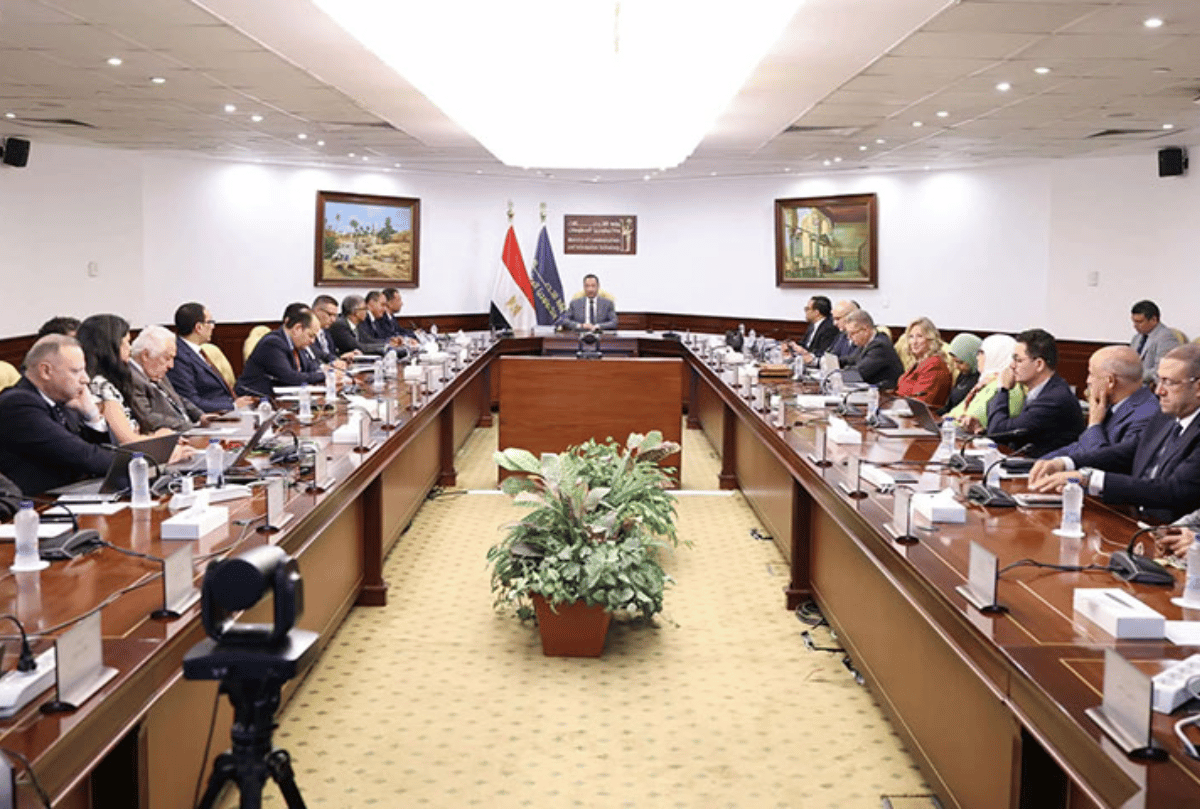
The National Council for Artificial Intelligence, Quantum Computing, and Emerging Technologies (NCAI) has convened under the chairmanship of Minister of Communications and Information Technology Raafat Hendy. The meeting covered a range of topics on strengthening Egypt’s capabilities in AI and quantum computing, developing AI governance frameworks, and following up on the National AI Strategy. It was attended by Council members and experts in different fields.
During the meeting, the ICT Minister said this year has seen intensive work to deliver the National AI Strategy’s targets. Egypt expanded its public awareness and digital skills programs for all age groups, took an active part in specialized international forums to discuss AI issues and advancements, strengthened international cooperation, and signed agreements with global companies to build AI partnerships.
He pointed to stepped-up efforts to attract investment in AI infrastructure and data centers, with several projects under way, alongside support for the local development of technology, the creation of specialized jobs for young people, and the drive to bring global companies to set up and expand AI centers of excellence in Egypt.
Hendy added that the effort also included building homegrown AI applications through the Applied Innovation Center (AIC) of the Ministry of Communications and Information Technology (MCIT). Among the most prominent are the Karnak LLM, the English-learning app Loghat, and Bel Masry, a platform that combines three AI engines for speech-to-text, machine translation, and text-to-speech. He stressed that work continues to make the most of AI across sectors.
The Council adopted the achievements report for the Second Edition of the National AI Strategy (2025-2030) covering the first half of 2026. The report reviewed progress across the pillars of governance, technology and applications, data, infrastructure, ecosystem, and talent. Key achievements include the launch of SIA, and educational app and a smart judicial assistant, more than 40 AI applications across the government and banking sectors, and the expansion of AI awareness and capacity-building programs.
NCAI also discussed several topics, chiefly the presidential directives on governance and the policy on the responsible use of generative AI in government entities. The meeting also reviewed Egypt’s leading technical and coordination role in AI across the Arab region and Africa.
In addition, the Council reviewed the outlines of the National Quantum Computing Strategy 2027–2030, which aims to build an integrated, secure, and sustainable national ecosystem for quantum technologies. This will be achieved by investing in talent development and scientific research, widening access to supporting infrastructure, accelerating the development of high-impact national applications, and fostering innovation across academia, government, and industry. The strategy also aims to prepare Egypt to seize the opportunities these technologies offer while managing their risks.
The meeting also covered several AI governance tools, including the Government Procurement Guidelines for AI Systems, Generative AI Guidelines for Government, and the Safe Use Guidelines for AI Applications for Children, a national policy framework for governing AI systems that affect children in Egypt.
The Safe Use Guidelines aims to protect children from the risks of AI, including harmful content, exploitation, bias, and privacy violations. It also seeks to harness this technology to support learning, creativity, inclusion, and equal opportunity while ensuring meaningful participation by involving children in the design and evaluation of the systems that affect them. The framework is grounded in the Egyptian Constitution, the Child Law, the Personal Data Protection Law, and relevant international conventions.