Arabsat Signs Agreement With China’s CGWIC to Manufacture Arabsat-50 Satellite
The new satellite is intended to strengthen the sustainability and continuity of Arabsat’s satellite broadcasting services while supporting its operational capabilities in the years ahead.
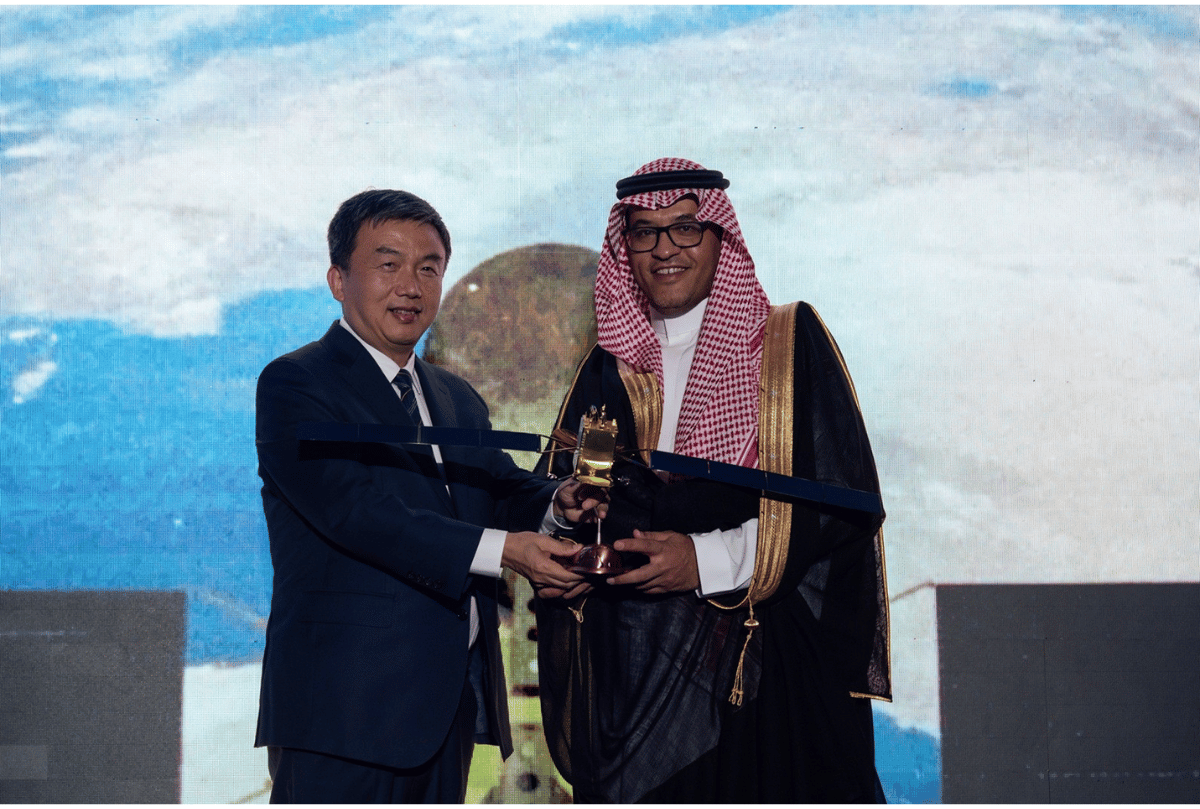
The Arab Satellite Communications Organization (Arabsat) has signed an agreement with China Great Wall Industry Corporation (CGWIC) to manufacture its new “Arabsat-50” satellite as the organisation marks its 50th anniversary.
The new satellite is intended to strengthen the sustainability and continuity of Arabsat’s satellite broadcasting services while supporting its operational capabilities in the years ahead. Its name reflects the organisation’s Golden Jubilee, linking five decades of Arab space activity with plans for a more resilient and sustainable satellite infrastructure.
“Arabsat-50” will be a high-power Ku-band satellite designed to support Direct-to-Home (DTH) television broadcasting services from the 26° East orbital position. It is expected to enhance service quality for satellite broadcasting customers and provide integrated technical solutions for government and private media channels across the Middle East.
The satellite will feature operational flexibility, allowing its beams and channel frequencies to be redistributed or modified according to changing operational requirements. Arabsat said this will improve capacity management and help maintain service continuity.
The satellite is being developed with CGWIC using the DFH-3E platform, which Arabsat described as a proven and reliable platform. The platform is designed to combine reliability, operational efficiency, sustainability and economic viability.
Arabsat-50 will also contribute to the organisation’s continuity and disaster recovery plans by providing flexible backup capabilities across its satellite fleet orbital positions, particularly at 26° East. The satellite is expected to support Arabsat’s future Ku-band capacity requirements.
The agreement marks a new phase in Arabsat’s five-decade development as the organisation continues to invest in flexible and efficient space infrastructure. The satellite is expected to support service continuity and enhance broadcasting capabilities for customers and viewers across the Arab region and beyond.