Ghana Calls for Results-Driven ITU Digital Agenda to Bridge Africa’s Connectivity Gap
George called for the ITU Strategic Plan for 2027–2030 to focus on measurable outcomes, including increased investment in last-mile connectivity and equitable access to spectrum and satellite orbits.
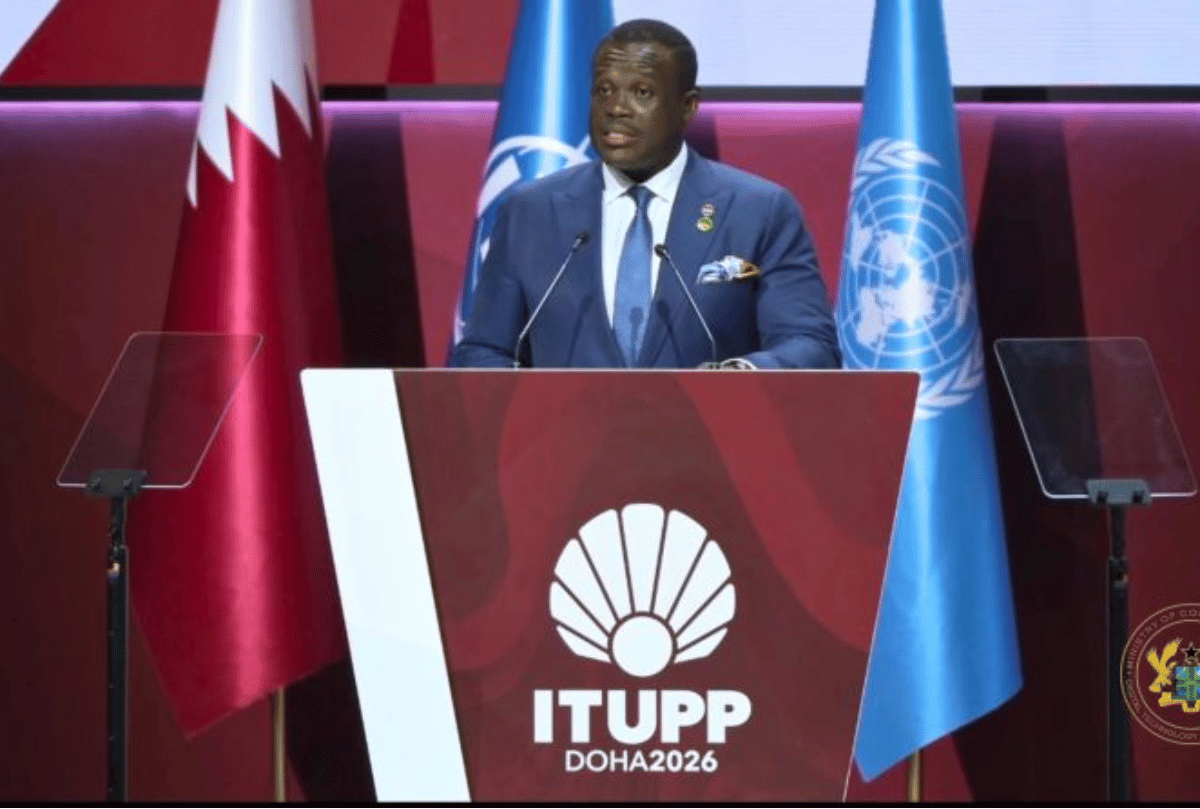
Ghana has called for stronger international cooperation and increased investment to address Africa’s digital divide, expand connectivity and ensure equitable access to emerging technologies.
The Minister for Communication, Digital Technology and Innovations, Samuel Nartey George, made the call at the 2026 International Telecommunication Union (ITU) Plenipotentiary Conference (PP-26) in Doha, Qatar. He noted that more than half of Africa’s population remained offline in 2026, highlighting the need for practical measures to extend connectivity to underserved communities.
George outlined Ghana’s ongoing digital initiatives, including the development of a National AI Compute Centre to support research, innovation and enterprise while encouraging responsible, ethical and inclusive artificial intelligence adoption.
He also highlighted the country’s One Million Coders initiative, which aims to equip people with digital skills to participate in the evolving digital economy.
On cybersecurity, the minister cited Ghana’s Tier 1 status in the Global Cybersecurity Index and said the country was ready to share its experience in establishing Computer Emergency Response Teams and implementing Child Online Protection protocols with other ITU member states.
George called for the ITU Strategic Plan for 2027–2030 to focus on measurable outcomes, including increased investment in last-mile connectivity and equitable access to spectrum and satellite orbits.
He also sought support for Ghana’s re-election to the ITU Council for Region D and for the re-election of National Communications Authority Director-General Ing. Edmund Yirenkyi Fianko to the Radio Regulations Board.