Vodafone Foundation Marks 30 Years with Major Impact Across Africa
Thirty years on, its African footprint not only improves lives but also sets global benchmarks for sustainable and scalable social impact.
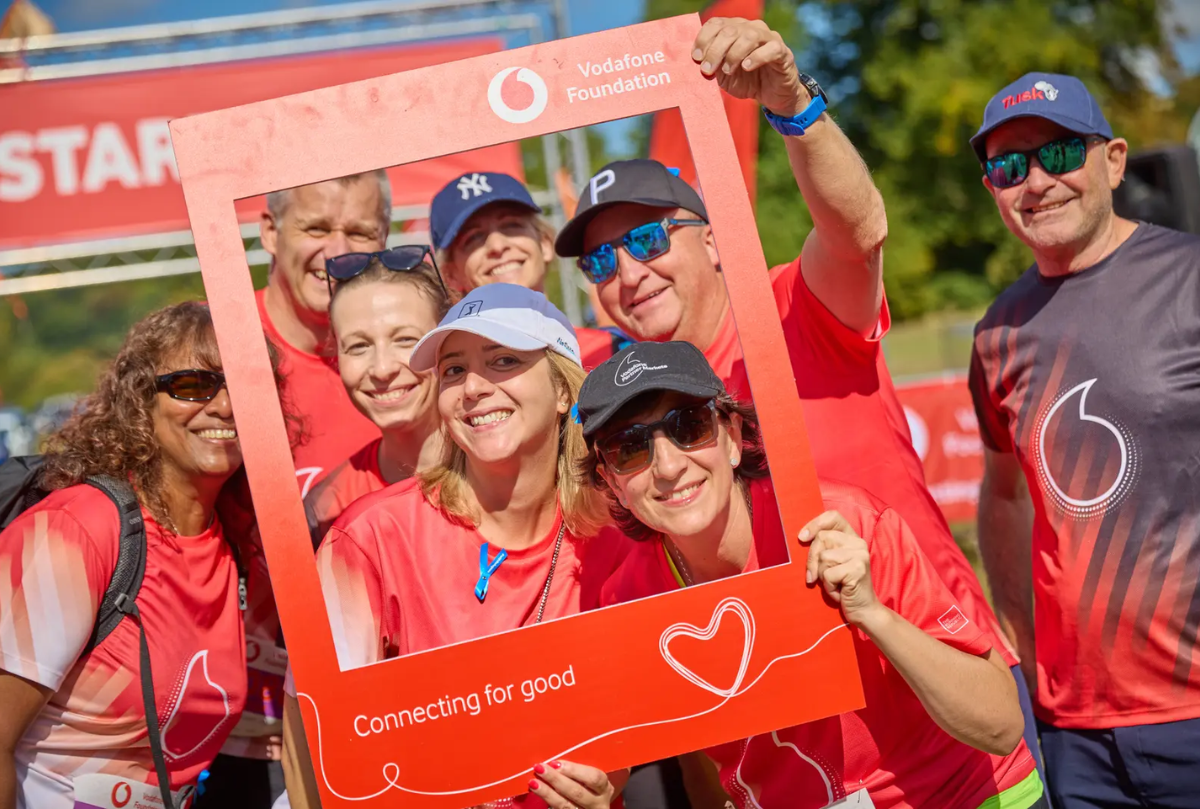
The Vodafone Foundation , celebrating more than 30 years of “Connecting for Good,” has released its 2024/25 impact report, highlighting Africa’s central role in its global mission to harness technology for social good. Since its establishment in 1991, the Foundation has focused on leveraging digital tools and partnerships to address some of the world’s most pressing challenges, with Africa standing out as a key region for its innovation and impact.
Since 2016, Vodafone Foundation initiatives — including those by affiliated Vodacom and Safaricom foundations — have improved more than 305 million lives globally. A significant portion of this impact has been achieved across Africa, where the continent has served as a testing ground for some of the Foundation’s most transformative programmes in digital learning, maternal health, and crisis response.
One of the flagship projects is the Instant Network Schools (INS) programme, developed in partnership with UNHCR. The initiative has provided over 376,000 refugee and host-community students in countries such as the DRC, Egypt, Kenya, Mozambique, South Sudan, and Tanzania with access to quality digital education. More than 6,800 teachers and coaches have also been trained. In Mozambique alone, 19 INS centres are now operational, supporting over 68,000 students. Among them is Izere, a refugee from Burundi, who uses INS technology to pursue her dream of becoming a doctor. Building on this success, a new Digital Inclusion for Youth (DIY) programme was launched in Ethiopia in partnership with Amref and Safaricom Ethiopia, with the goal of empowering 50,000 young people through internships, job placements, and 2,000 scholarships.
Maternal health has also been a critical focus. Sub-Saharan Africa, which accounted for around 70% of global maternal deaths in 2023, has benefitted from Vodafone’s innovative m-mama programme. This low-cost, community-driven emergency transport system operates in Tanzania and Lesotho, connecting mothers in crisis to lifesaving care. By 2025, m-mama had facilitated more than 142,000 emergency transports, saved 5,800 lives, and contributed to a 15% reduction in maternal deaths in Tanzania. The programme’s success led to full government adoption in both countries. Tanzania’s President Samia Suluhu Hassan even dedicated her Gates Foundation Goalkeeper Award to healthcare workers and to the impact of m-mama.
Africa’s vulnerability to natural disasters and mass displacement has further underscored the importance of resilience programmes such as Instant Network Emergency Response (INER). While much of the INER deployment during 2024/25 was concentrated in Europe, the model — which combines volunteer expertise with portable technology — remains highly relevant to African regions prone to floods, droughts, and conflict-related displacement.
The Foundation has also expanded its work in addressing harm and abuse through digital tools. Its award-winning apps — Bright Sky, which supports survivors of domestic violence, and Zoteria, which addresses anti-LGBTQ+ hate crime — are currently more prominent in Europe but are being considered for adaptation in Africa. This is particularly timely given the high prevalence of gender-based violence across the continent.
Local leadership has been another defining feature of Vodafone Foundation’s African strategy. Trustee Patricia Ithau, CEO of WPP-Scangroup PLC and Trustee of the M-Pesa Foundation Kenya, has brought regional expertise that reinforces the Foundation’s commitment to locally grounded strategies and partnerships.
Looking ahead to 2025/26, Vodafone Foundation has set ambitious goals for Africa. These include scaling the m-mama programme to Malawi, expanding refugee education and digital skills initiatives across the continent, and integrating gender equality and climate resilience into all programmes. Such priorities reflect the Foundation’s recognition that African communities are disproportionately affected by both inequality and climate change.
From refugee camps in Mozambique to rural clinics in Tanzania, Vodafone Foundation’s work across Africa shows how technology, partnerships, and local ownership can address some of the continent’s most urgent challenges. Thirty years on, its African footprint not only improves lives but also sets global benchmarks for sustainable and scalable social impact.