Zambia Seeks to Accelerate Digital Economy Through Public-Private Collaboration
The engagement reaffirmed the shared commitment between government and the private sector to position Zambia as a competitive regional technology hub through investment in innovation, digital infrastructure and strategic partnerships.
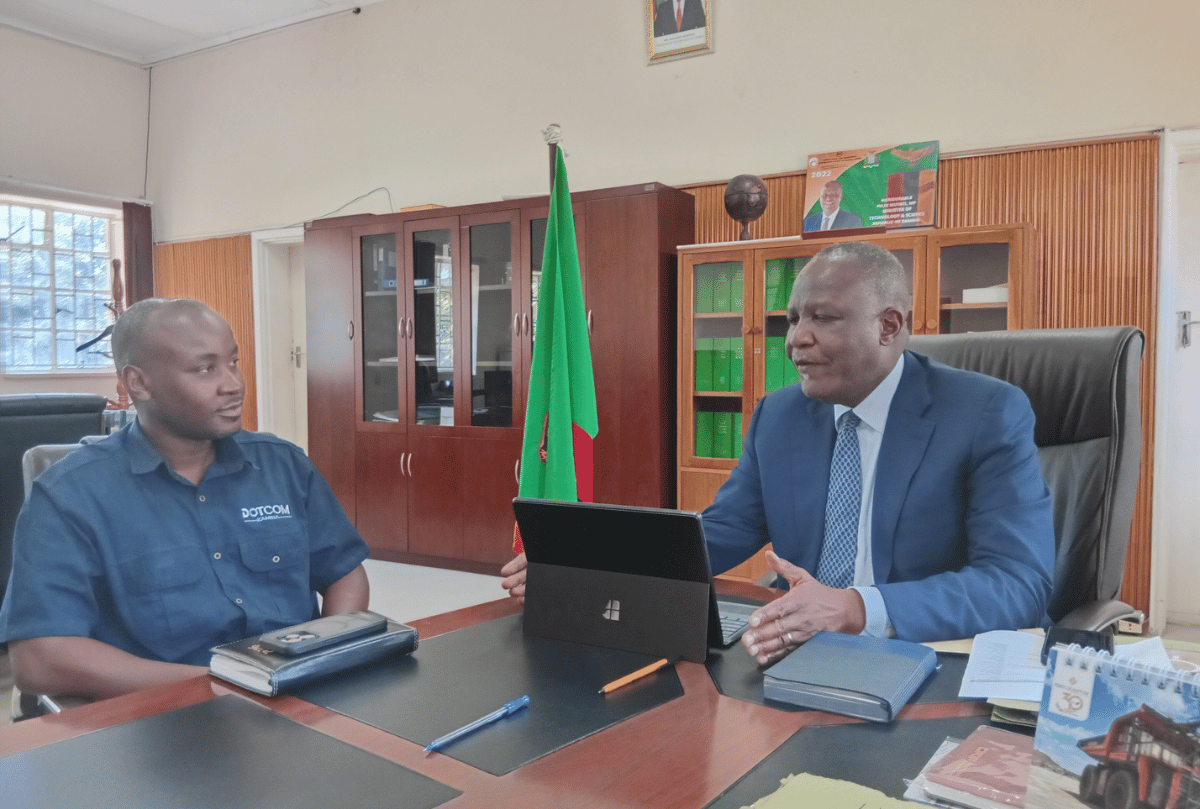
The Zambian government has reaffirmed its commitment to accelerating the country’s digital transformation agenda through stronger collaboration with local technology companies and investment in digital infrastructure.
This followed a courtesy call by Dot Com Zambia PLC Chief Executive Officer Mawano Kambeu on Minister of Technology and Science Felix Chipota Mutati to discuss the role of indigenous technology firms in supporting Zambia’s innovation and economic development goals.
The meeting focused on how local technology enterprises can contribute to government service delivery, financial system modernization, digital infrastructure development and innovation-led economic growth in line with President Hakainde Hichilema’s vision for a digitally connected economy.
Dot Com Zambia PLC, founded in 2009, provides payment systems, revenue collection platforms and digital business solutions for both public and private sector clients. Its platforms include eToll and eLevy systems aimed at improving efficiency, transparency and accountability.
During the discussions, Minister Mutati emphasized the need for Zambian technology firms to build strong governance systems and operational credibility in order to attract investment and participate successfully in capital markets.
He commended Dot Com Zambia PLC for becoming one of the first local technology firms to list on the Lusaka Securities Exchange, describing the move as a significant milestone for Zambia’s ICT sector and a demonstration that technology companies can raise capital transparently.
The minister also highlighted Zambia’s efforts to establish regional technology partnerships with countries including Mauritius and Ghana to support digital investment hubs and knowledge-sharing initiatives across Africa.
A major focus of the engagement was the importance of integrated digital systems and national digital identity infrastructure. Mutati said establishing a “single source of truth” through digital identity management could reduce fraud, improve Know Your Customer (KYC) processes, strengthen social protection programmes and enhance public service delivery.
Drawing lessons from Ghana’s digital identity framework, the minister noted that digital integration has improved transparency and operational efficiency across sectors.
The discussions also explored opportunities for local technology firms to develop solutions using existing government digital infrastructure, including the Government Service Bus and integrated systems connected to the Patents and Companies Registration Agency (PACRA).
Mr. Kambeu said Dot Com Zambia PLC remains committed to supporting Zambia’s digital transformation through innovation-driven solutions and stronger collaboration between government and the private sector.
He described the company’s recent stock exchange listing as a breakthrough for the local ICT industry and evidence of growing investor confidence in Zambia’s technology sector.
The engagement reaffirmed the shared commitment between government and the private sector to position Zambia as a competitive regional technology hub through investment in innovation, digital infrastructure and strategic partnerships.