Nigeria Shifts From Regulation to Market Enablement to Attract Digital Infrastructure Investment
He identified five pillars supporting innovation within connected local ecosystems: higher institutions for human capital development, entrepreneurs to commercialise innovations, corporate organisations to absorb talent, risk capital to de-risk investments and government to provide a stable enabling environment.
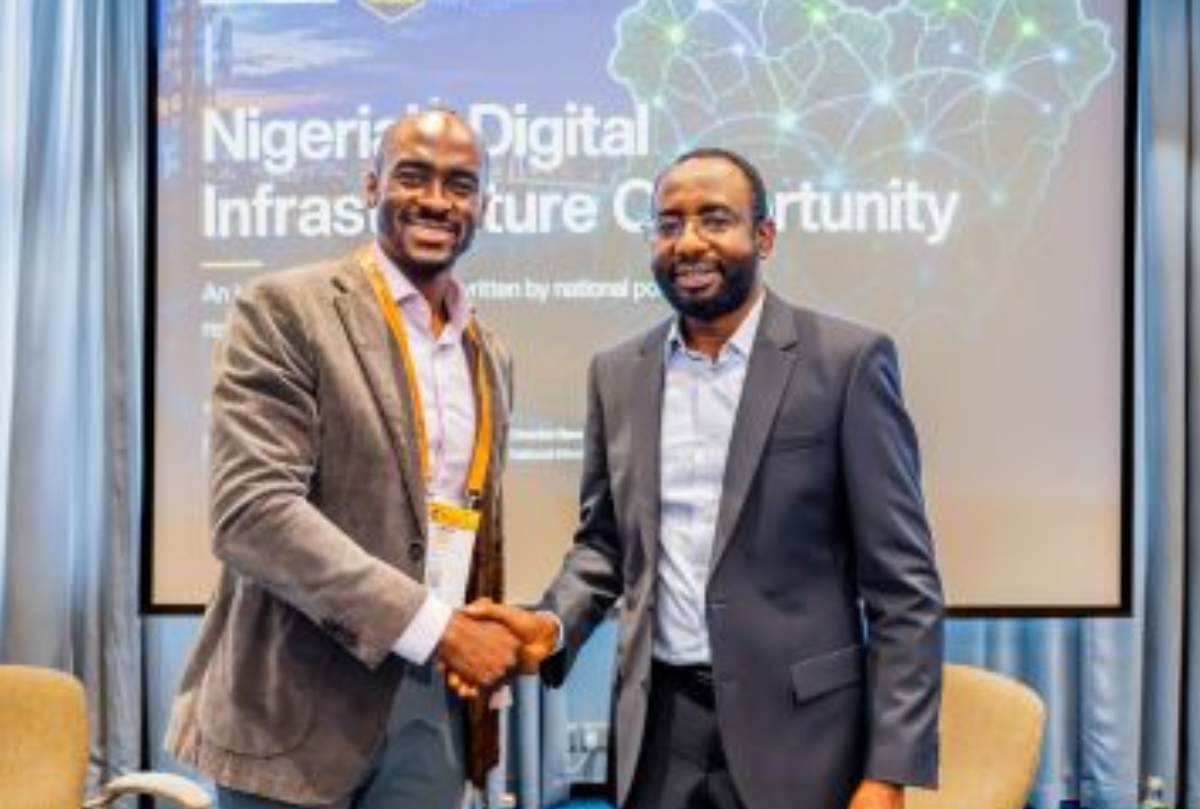
Nigeria is seeking to strengthen its position as an investment destination for digital infrastructure by shifting from a traditional regulatory approach towards actively enabling market growth and private-sector investment.
The Director-General of the National Information Technology Development Agency (NITDA) , Kashifu Inuwa Abdullahi, CCIE, outlined the approach during a fireside chat titled “From Policy to Investable Demand” at the Nigerian Workshop on Nigeria’s Digital Infrastructure Opportunity, held during ITW Data Cloud Africa 2026 in Nairobi, Kenya. The session was moderated by Jay Katatumba, Senior Investment Director at Africa50 Infrastructure Acceleration.
Addressing data centre operators, hyperscalers, infrastructure providers, investors, financial institutions, cloud providers and subsea cable and fibre connectivity companies, Inuwa said Nigeria’s National Cloud Infrastructure Strategy is designed to connect public policy with private capital by turning regulatory requirements into contracted demand.
He identified five pillars supporting innovation within connected local ecosystems: higher institutions for human capital development, entrepreneurs to commercialise innovations, corporate organisations to absorb talent, risk capital to de-risk investments and government to provide a stable enabling environment.
According to Inuwa, NITDA’s regulatory interventions are aimed at creating markets, stimulating local innovation and strengthening consumer protection rather than simply imposing compliance requirements.
He highlighted measures intended to generate investment-ready demand, including Central Bank of Nigeria requirements for the domestic processing of financial transactions. The National Digital Cloud Policy and its investment roadmap are also intended to reduce barriers to private-sector participation by creating opportunities for local data centre development, expanded fibre networks and digital talent development.
On the energy requirements associated with expanding data processing capacity, Inuwa said digital infrastructure operators do not have to rely exclusively on the national grid. He pointed to regulatory pathways supporting captive power through renewable energy, gas-fired generation and Independent Power Purchase Agreements.
He also highlighted the role of hybrid cloud architectures in balancing scalability with data sovereignty. Such models allow organisations to run workloads on public cloud platforms while retaining sensitive information locally. Data localisation requirements cover critical categories including financial transactions, health records and defence intelligence, which the government considers important to national security and economic sovereignty.
Inuwa further linked connectivity, cloud computing and artificial intelligence, noting that nationwide broadband expansion under Project Link is intended to improve digital inclusion and ensure citizens are represented in increasingly automated systems.
At the same time, the National Sovereign Cloud Initiative is being positioned as the computing foundation for sovereign AI applications across sectors including financial services, healthcare and the judiciary.
Inuwa said Nigeria’s progress in AI governance and policy, alongside recognition from the International Monetary Fund as a leading emerging AI economy in Africa, presents opportunities for investors seeking to participate in the country’s digital infrastructure expansion.
He urged investors to take advantage of Nigeria’s emerging ecosystem for secure and scalable digital infrastructure as the country seeks to convert policy initiatives into commercially viable opportunities.