IFC Roundtable Puts De-Risking and SME Finance at Centre of Africa’s Capital Mobilisation Agenda
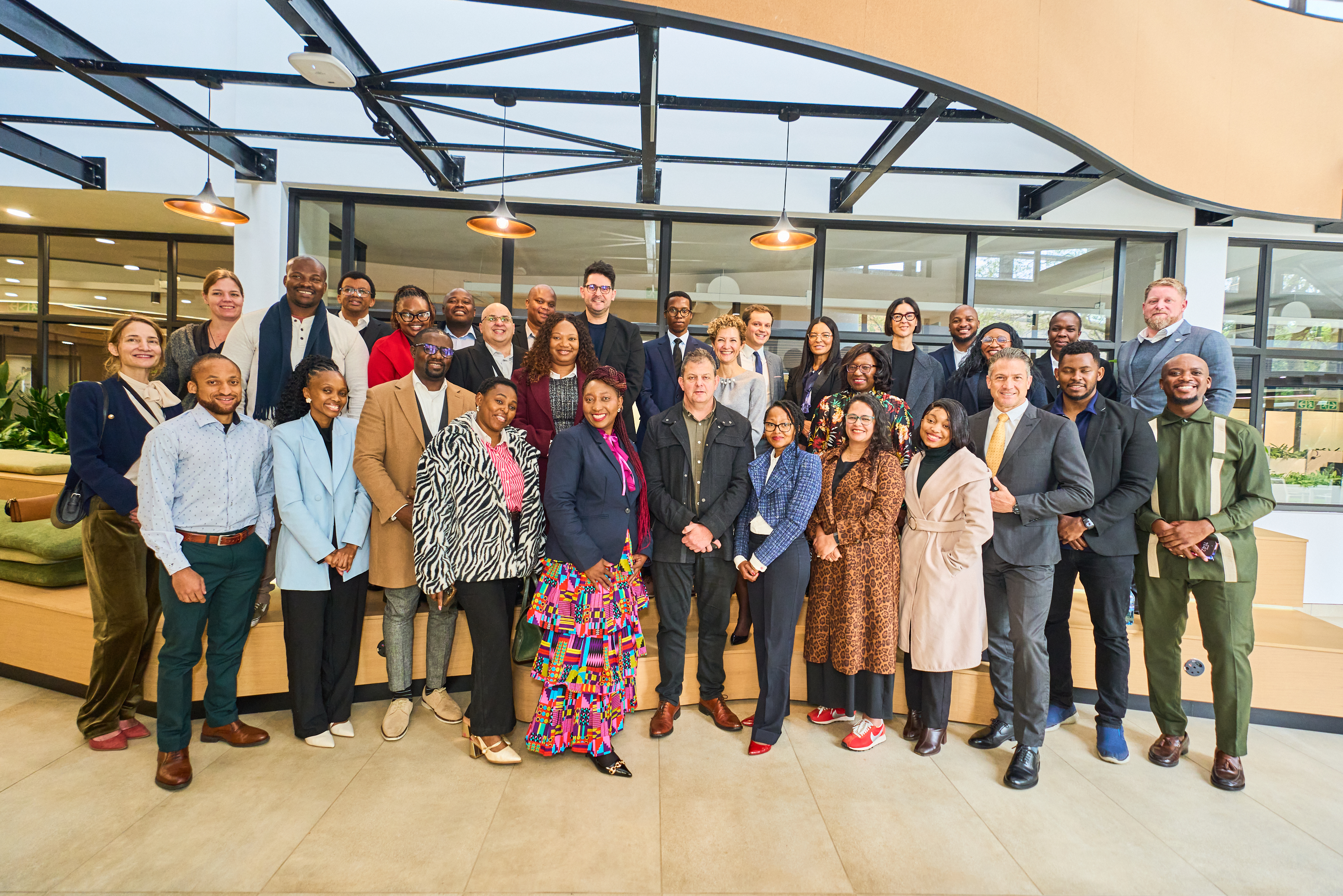
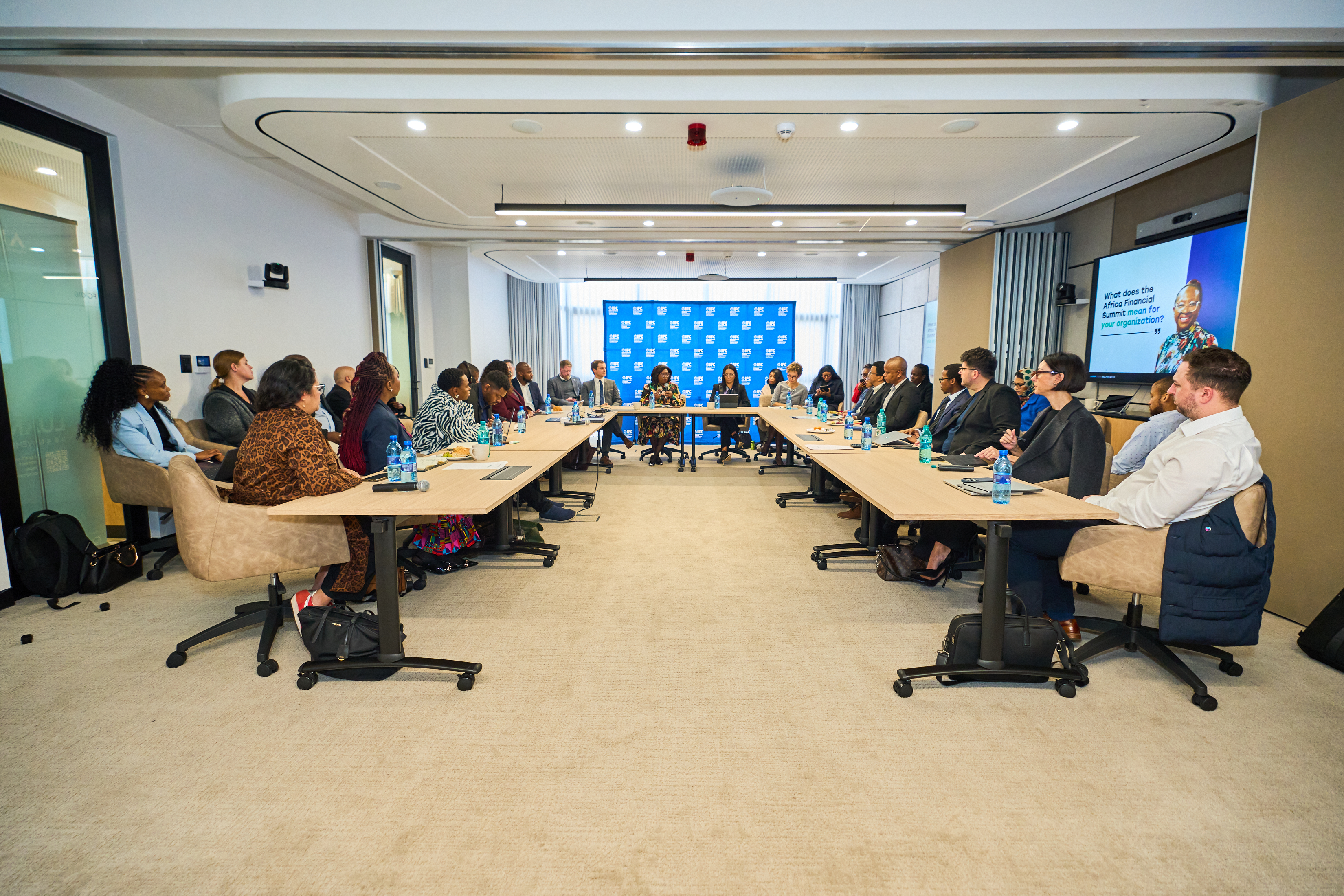
Ahead of the Africa Financial Industry Summit (AFIS) 2026, the International Finance Corporation (IFC) convened senior banking executives, development finance institutions and financial innovators in Johannesburg on 30 September to ask why so much institutional capital sits in low-risk government paper while African MSMEs face a financing gap of close to $50 billion.
The session was the Johannesburg edition of The Road to AFIS, a roadshow ahead of the summit, which takes place in Luanda, Angola, on 3 and 4 November. It will be the first AFIS held in Southern Africa and in a Portuguese-speaking country.
The roundtable brought together Cláudia Conceição (Regional Director for Southern Africa, IFC), Defne Akarcali (Principal Investment Officer, Financial Institutions Group, Southern Africa, IFC), Bongi Kunene (Managing Director, The Banking Association South Africa) and Adrian Fielding (Managing Director, AFIS), alongside representatives from the private sector, media and academia.
The discussion pointed to a financing problem that extends beyond the availability of capital in Africa. The harder questions are where liquidity flows, how credit risk is absorbed, and whether financial institutions have the tools to lend beyond established corporate borrowers.
For Conceição, the challenge is one of deployment. African markets need to move from financial access to affordable, longer-term financing, from innovation to scale, and from available capital to productive investment. That includes SMEs, infrastructure, manufacturing, agriculture and energy, where financing needs remain substantial.
“The next decade will not be defined by whether capital exists or not in Africa. It will be defined by whether we put that capital to work for Africa.”
– Cláudia Conceição, Regional Director for Southern Africa, International Finance Corporation (IFC)
That points to a different approach to mobilising capital, built on three priorities: using alternative data to rethink loan underwriting, de-risking bank balance sheets, and channelling local institutional savings into high-growth domestic sectors.
Closing the $50 Billion SME Credit Gap: Alternative Data, Collateral Reform, and Shared Risk
The capital misallocation is most acute among micro, small and medium enterprises (MSMEs), where rigid underwriting models keep viable businesses out of formal credit.
Akarcali put the MSME financing gap at close to $50 billion. Closing it takes more than fresh liquidity in bank balance sheets. It also takes better financial literacy among entrepreneurs, stronger credit infrastructure, and the use of alternative data, such as the digital cash flow captured by mobile network operators.
“You also need to work with the entrepreneurs, the SMEs, so that they learn how to put together financial statements. There’s the whole financial literacy. You need to be able to find the disruptors to support the disruptors. So it’s not only providing the collateral by the SME, but relying more on the digital cash flow that is being captured through the mobile operators. We need to work with the regulators and other stakeholders to enable the infrastructure to include those SMEs.”
– Defne Akarcali, Principal Investment Officer, Financial Institutions Group, Southern Africa, IFC
IFC is working with commercial banks and fintechs to scale risk-sharing models. Between June 2025 and June 2026, it invested $1.5 billion with financial institutions in Southern Africa, mobilising $1.40 in third-party capital for every dollar invested. Its regional financial sector portfolio is close to $3 billion. Akarcali also stressed that much of the lending is in local currency, which matters in markets where borrowers struggle to repay in dollars.
Capital supply is only half the equation. Kunene noted that about 230 pieces of legislation touch South African banks and feed into the regulatory capital they hold, while international standards such as Basel shape how they price SME and cross-border infrastructure risk.
“We know we have a problem. Now that we are sitting together with the FinTechs and others, we have a better chance of opening dialogue with the international financial institutions like the IFC and thinking differently because everything that we’ve done for the past 40 years has an impact.”
-Bongi Kunene, Managing Director, The Banking Association South Africa (BASA)
Kunene called for doing things differently, including the collateral registry work IFC is supporting and a new understanding of what underpins a loan.
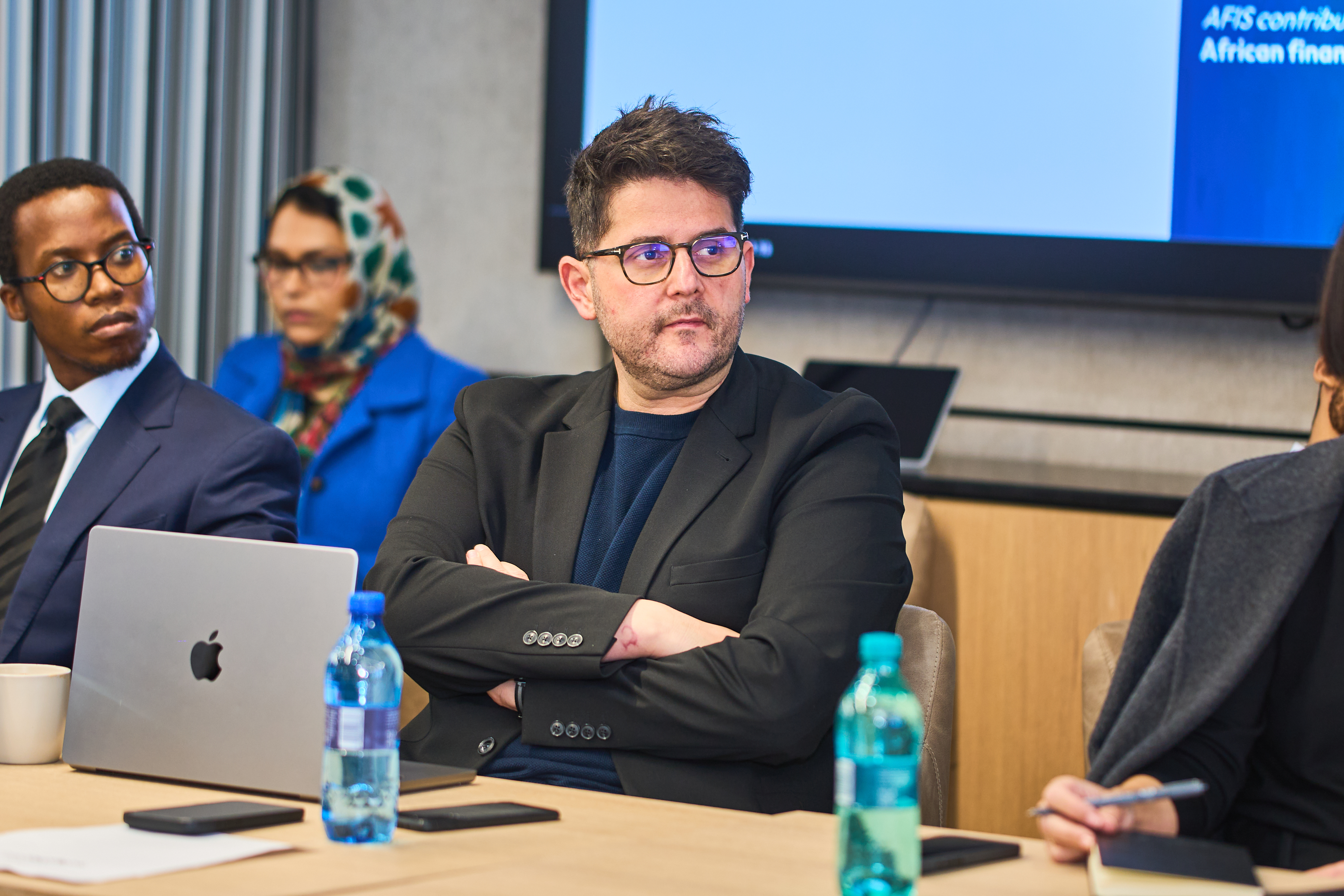
Mobilising Domestic Institutional Savings Through De-Risking
The dialogue also covered the pools of domestic African capital, such as pension funds, insurance assets and sovereign wealth, that sit largely in government securities.
Fielding noted that African banks are among the most profitable in the world, yet only about 30% of their balance sheets goes out as loans to companies and households. The rest sits in government bonds, central bank reserves and cash. He said the same pattern holds in insurance, citing $441 billion in insurance pools. AFIS 2026, he explained, is built around raising risk appetite while finding innovative de-risking mechanisms that let finance reach productive assets.
Connecting domestic savings to real-economy projects in agriculture, MSMEs, housing and infrastructure remains central to building scale. South Africa has a part to play here. Fielding said South African insurers already finance infrastructure and that South African finance has balance sheets the rest of the continent could use.
“South Africa really has a chance in Luanda to show that it can set the example. South African finance has the balance sheets that Africa’s productive assets could use, and too little of that money is currently deployed across the continent.”
– Adrian Fielding, Managing Director, Africa Financial Industry Summit (AFIS)
Akarcali added that South African banks are expanding across the continent, bringing expertise and experience that other markets can learn from, and that they need a seat at the table on cross-border payments and regional integration.
Executing on Development Impact: Measuring Success by Capital Deployed
For the participants, the test is whether coordination leads to capital deployed on the ground.
Conceição said IFC looks at development impact alongside transaction volume, with a focus on job creation, gender and sectors such as agriculture, tourism, manufacturing and infrastructure. She also flagged early-stage seed capital as a bottleneck for start-ups, including in South Africa, where IFC is exploring a way to deploy small amounts of seed funding alongside business support.
“The financial transaction is not the end result. The end result is to see, for example, a manufacturer expanding production, agribusiness reaching out to new markets, and small businesses accessing working capital.”
– Cláudia Conceição, Regional Director for Southern Africa, International Finance Corporation (IFC)
The Q&A pushed on delivery. Francois Migida, a faculty member at Henley Business School, asked how AFIS measures its impact beyond the event itself. Fielding said impact is hard to track beyond deals done, but that a 30-member supervisory council and an advisory board monitor progress against the AFIS 11, an action framework running to 2035.
The session pointed to four priorities for AFIS 2026: refine credit-enhancement and de-risking mechanisms, bring alternative data into credit evaluation, unlock domestic savings pools, and make sure regional financial integration turns into balance-sheet support for African businesses.