Central African Republic Calls for Regional Digital Infrastructure Resilience
Andjalandji highlighted the CAR’s vulnerability to disruptions in cross-border telecommunications infrastructure, explaining that the country depends entirely on transcontinental terrestrial fibre links to access submarine cable networks.
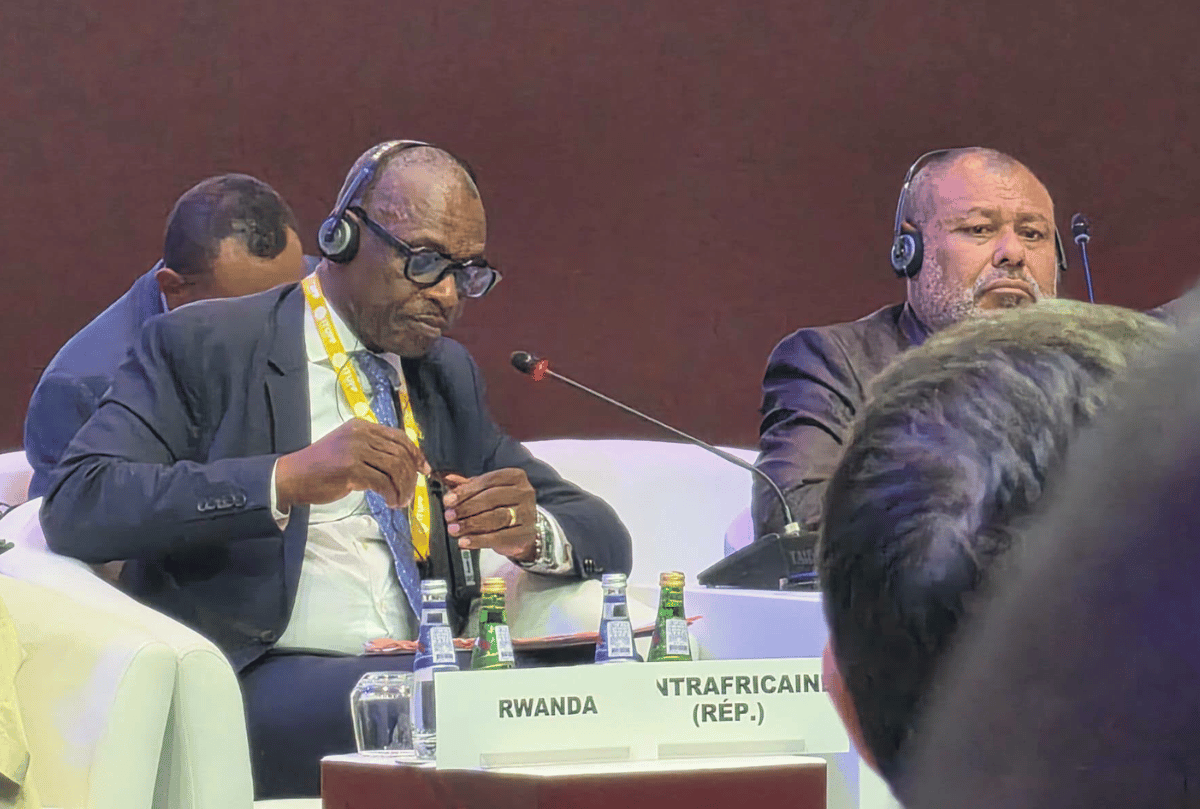
The Central African Republic (CAR) has called for stronger regional digital infrastructure resilience, including diversified fibre-optic routes, satellite connectivity and increased local internet traffic hosting, during the International Telecommunication Union’s (ITU) Plenipotentiary Conference 2026 (PP-26) in Doha, Qatar.
The country’s Minister of Digital Economy, Posts and Telecommunications, Roger Andjalandji, made the call during a high-level thematic discussion on digital resilience on 10 November. He was accompanied by Gauthier Guezewane Gbowé, a mission officer on digital economy.
Andjalandji highlighted the CAR’s vulnerability to disruptions in cross-border telecommunications infrastructure, explaining that the country depends entirely on transcontinental terrestrial fibre links to access submarine cable networks. He noted that fibre cuts in neighbouring countries, including Cameroon, the Republic of Congo and the Democratic Republic of Congo, can disrupt connectivity and affect economic activities and essential services such as banking, healthcare and public administration.
To address these challenges, the minister called for the diversification of fibre-optic routes across the Central African Economic and Monetary Community (CEMAC) and the Economic Community of Central African States (ECCAS) regions to reduce dependence on single transit corridors.
He also advocated combining terrestrial fibre infrastructure with satellite connectivity to provide backup capacity during network disruptions and extend connectivity to remote areas.
On digital sovereignty, Andjalandji called for stronger local hosting of national internet traffic through Internet Exchange Points (IXPs). Such infrastructure can help reduce dependence on external networks and improve the quality of connectivity services.
The minister further urged the ITU and its technical and financial partners to increase support for least developed countries through funding for resilient digital infrastructure, skills transfer and technical training.
The PP-26, taking place from 9 to 27 November 2026 at the Doha Exhibition and Convention Centre, brings together delegations from the ITU’s 194 member states. The conference sets the organisation’s strategic direction, considers its 2028–2031 Strategic Plan and Financial Plan, and holds elections for senior leadership positions.
The CAR’s participation aligns with its National Digital Strategic Plan 2030, which seeks to develop robust, sovereign, resilient and inclusive digital infrastructure to support the country’s economic and social transformation.