Morocco Emphasizes Training and Ethical Framework for AI Revolution
Mr. Berrada pointed to the use of artificial intelligence to align curricula with the abilities of each student, ensure the continuous training of teachers, promote language learning, as well as combat the phenomenon of absenteeism and dropping out of school.
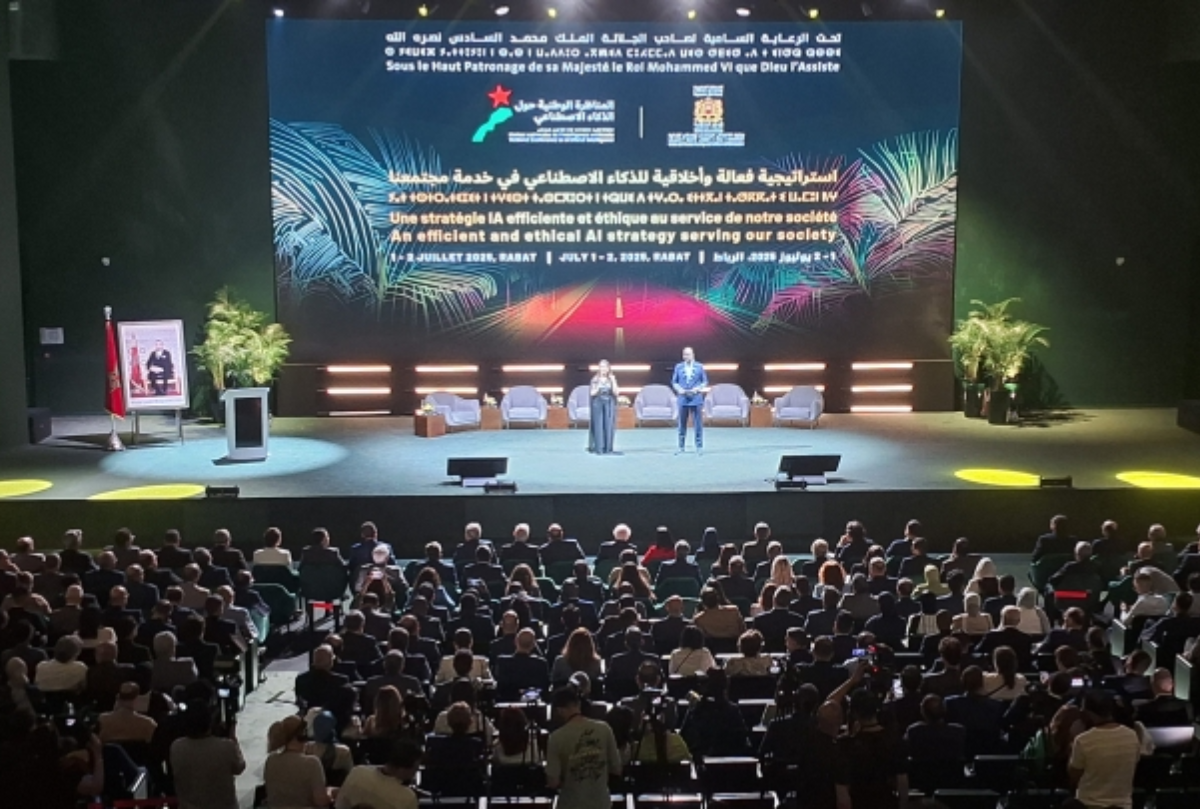
Ministers participating in the first plenary session of the National Debate on Artificial Intelligence, on Tuesday 01 July in Salé, stressed that the training of public and private actors on AI tools is an essential lever to take full advantage of the possibilities and opportunities offered by new technologies.
These ministers highlighted that at a time when artificial intelligence has become a key factor for achieving competitiveness, training has become an indispensable condition for seizing this opportunity and making it a lever for sustainable and shared growth, noting that the popularization of artificial intelligence has already profoundly transformed societies, economies and current work patterns.
In a speech on this occasion, the Minister of National Education, Pre-School Education and Sports, Mohamed Saad Berrada, stressed the importance of adopting artificial intelligence tools to enhance the management of the educational system and respond to the challenges posed, especially in processing data related to students and teachers.
He stressed that the Ministry continues its efforts in the field of digitization of public schools, noting that the emergence of artificial intelligence holds great potential, especially with regard to improving the quality of schooling and modernizing pedagogical practices.
In this regard, Mr. Berrada pointed to the use of artificial intelligence to align curricula with the abilities of each student, ensure the continuous training of teachers, promote language learning, as well as combat the phenomenon of absenteeism and dropping out of school.
For his part, the Minister of Economic Inclusion, Small Enterprise, Labour and Competencies, Younes Skouri, stressed that artificial intelligence is a decisive factor capable of transforming the labor market.
He added that artificial intelligence will enable improved performance and productivity in companies, while ensuring a better alignment between skills and economic needs, which is a key factor in injecting dynamism into the national economy.
On the other hand, the minister stated that in the face of the challenges posed by this technological revolution, the role of the government is to include artificial intelligence within an appropriate legal framework that can liberate all the potential of society.
For her part, the Minister of Energy Transition and Sustainable Development, Leila Benali, highlighted the intrinsic interdependence between energy and artificial intelligence.
“Without energy, there are no servers, no data centers, no artificial intelligence,”
–Leila Benali, Minister of Energy Transition and Sustainable Development, Morocco.
She noted that the kingdom plans to double its capacity to produce unconventional energy in less than five years, a workshop equivalent to what has been accomplished over the past thirty years.
Speaking about the emergence of integrated economic models that combine artificial intelligence and clean energy, she explained that countries with qualified human capital and low-carbon competitive energy, such as Morocco, are well positioned to become major technological poles.
For his part, the president of the General Confederation of Moroccan Enterprises (CGEM), Chakib Alj, highlighted the challenges posed by the rise of artificial intelligence for the private sector, stressing that the national strategy in the field of artificial intelligence is well defined, but it is urgent to implement it effectively.
He stressed the need to train qualified engineers and human resources, praising the experience of the Moroccan Programming School 1337 in training young talents adept in the field of technology, a model that should be generalized in order to better respond to the needs of the labor market and combat unemployment.
Mr. El Alj also praised Morocco’s structured qualifications, noting the country’s strong digital connectivity and increasing openness to technologies applied in medicine, agriculture, services and other sectors.
It is noteworthy that the national debate on artificial intelligence is being held under the high patronage of His Majesty King Mohammed VI, at the initiative of the Ministry of Digital Transition and Administration Reform under the slogan “An effective and ethical artificial intelligence strategy at the service of our society”.