Egypt, UNESCO and EU Unveil Landmark AI Readiness Assessment Report
The report, developed in partnership with UNESCO’s Regional Office in Egypt and Sudan and financed by the European Union, provides a comprehensive evaluation of Egypt’s capacity to adopt AI sustainably, ethically, and inclusively.
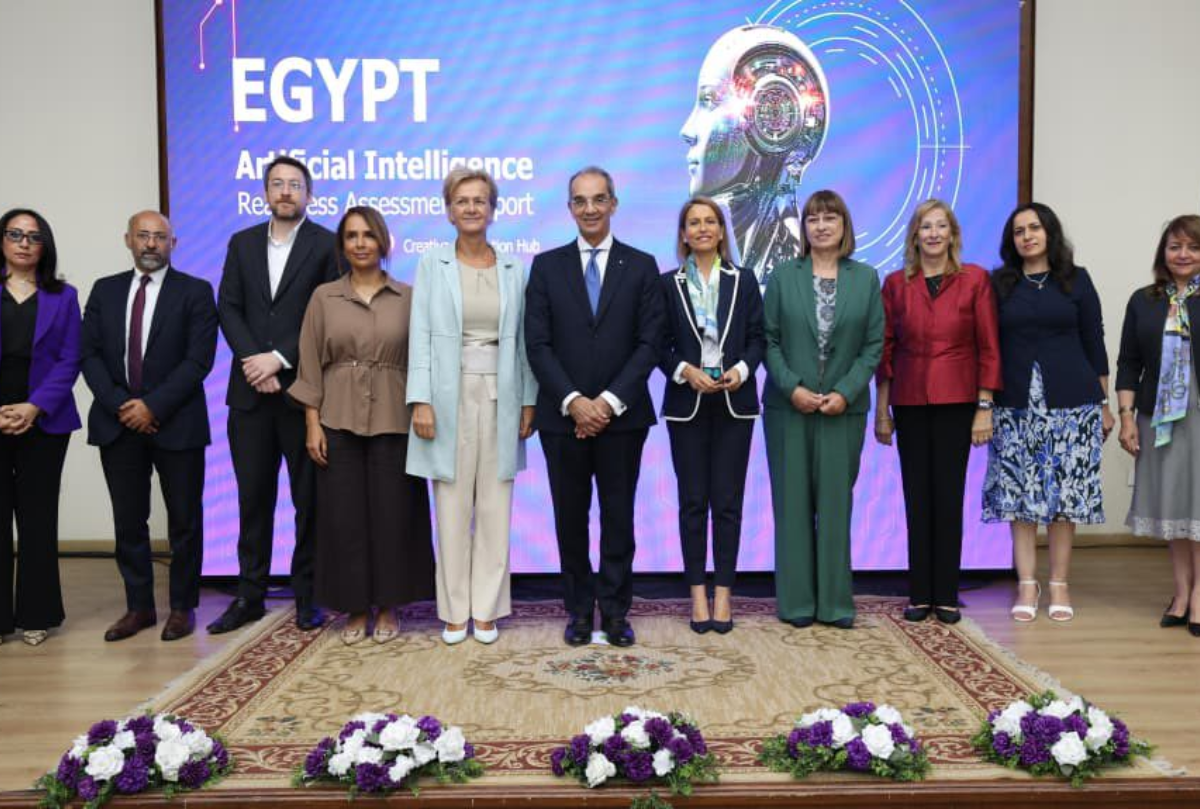
Egypt has taken another bold step toward responsible digital transformation with the launch of its National Artificial Intelligence Readiness Assessment Report, unveiled in Giza by Minister of Communications and Information Technology, Dr. Amr Talaat.
The report, developed in partnership with UNESCO’s Regional Office in Egypt and Sudan and financed by the European Union, provides a comprehensive evaluation of Egypt’s capacity to adopt AI sustainably, ethically, and inclusively. It also outlines a roadmap for strengthening governance, accelerating innovation, and positioning Egypt as a regional leader in AI adoption.
Speaking at the launch, Dr. Talaat described the report as “a precise diagnostic tool that enables Egypt to reinforce its strengths, address pressing challenges, and seize emerging opportunities.” He noted that the findings would directly feed into the second phase of Egypt’s National AI Strategy (2025–2030).
The report emphasises AI’s potential to fuel inclusive economic growth and job creation, reduce poverty and living costs through more efficient services, and strengthen state capability by enhancing transparency and accountability. It identifies three priority areas: regulatory frameworks, institutional structures, and capacity building.
Egypt’s strategic roadmap is built on six pillars – governance, data, AI applications, computing power, capacity building, and awareness & innovation. Notable progress already includes the launch of open data and cloud-first policies, AI applications in justice and healthcare, and plans to train 30,000 specialised engineers by 2030.
UNESCO officials commended Egypt’s leadership role. Lidia Brito, UNESCO Assistant Director-General, said the assessment “confirms Egypt’s commitment to building an ethical and inclusive AI ecosystem”, while Dr. Nuria Sanz, UNESCO Regional Director, highlighted that the process connects Egypt to a global dialogue with over 70 countries applying the same methodology.
The event also hosted a high-level panel on “Egypt’s Path Towards Responsible AI”, featuring representatives from UNESCO, ITU, the Arab League, Egypt’s Foreign Ministry, and private sector innovators.
Senior dignitaries, including Ambassador Angelina Eichhorst of the EU Delegation, Elena Panova, UN Resident Coordinator in Egypt, and senior officials from government, academia, and civil society, underscored international support for Egypt’s vision of a responsible, human-centred AI future.