MWC Barcelona Day 2 | The IQ Era in Motion: AI, Affordability, and the Architects of What Comes Next
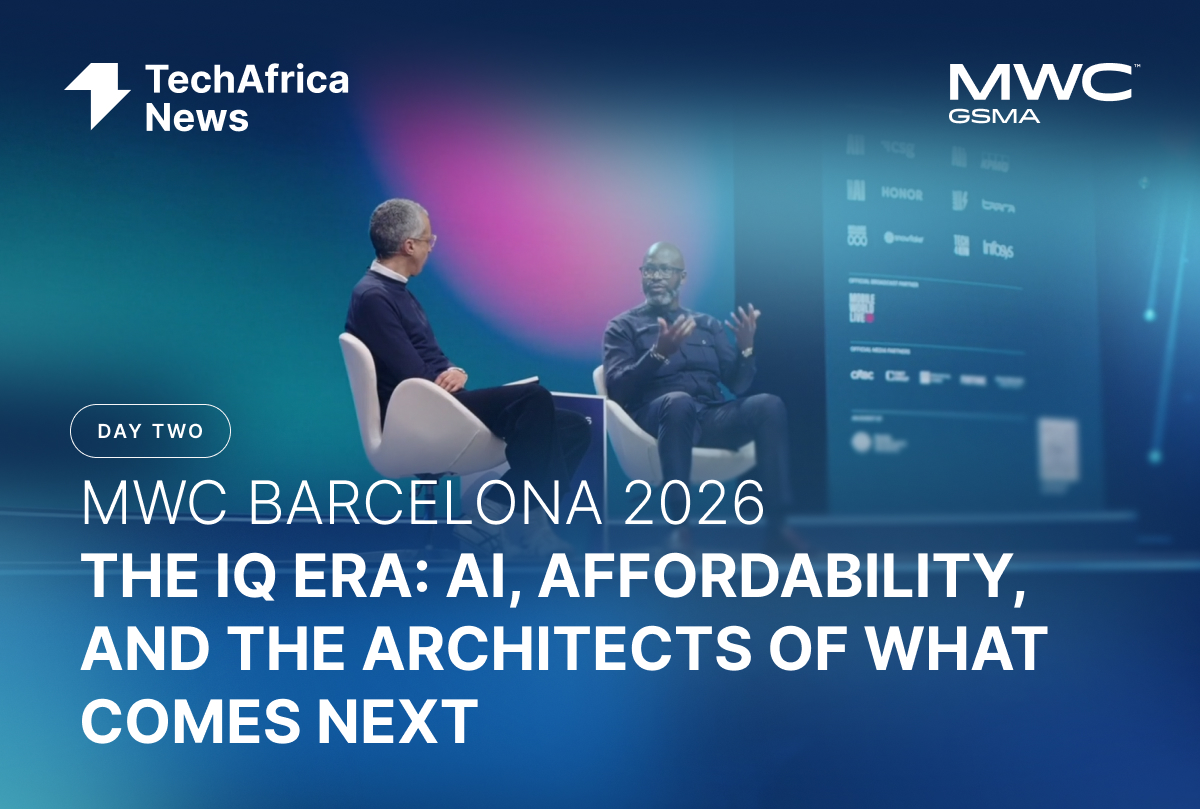
Day One set the tone. Day Two raised the stakes.
As the Fira Gran Via filled up on Tuesday morning, MWC Barcelona 2026 shifted from grand declarations to ground-level action. The halls felt denser, the conversations more specific, and the announcements more pointed. If Day One was about establishing the ambition of The IQ Era, Day Two was about showing what that ambition looks like in practice, on the exhibition floor, in the session rooms, and across the industry partnerships taking shape in real time.
From 5G Standalone roundtables and O-RAN summits to the latest in AI-driven network automation, the day’s programme reflected an industry in active transition. The questions driving MWC 2026 are no longer just about what is possible. They are about what is deployable, scalable, and inclusive, and who gets left behind if the answers come too slowly.
TechAfrica News was back on the ground at Fira Gran Via, continuing our coverage as an official media partner of MWC Barcelona 2026.
Keynotes & Sessions: Architects of the AI Age
If Day One belonged to the big-picture declaration, Day Two belonged to the builders.
Day Two brought another packed programme of keynotes and headline sessions across the main stages at Fira Gran Via. Industry leaders, innovators, and policymakers took to the podium to unpack the defining themes of MWC Barcelona 2026, from AI-driven network transformation and 5G Standalone deployment to the future of intelligent connectivity and responsible innovation.
Among the standout moments was Keynote 6: Architects of the AI Age, which drew a full house and kept the conversation from Day One firmly alive. Speakers explored how agentic AI is reshaping the telecommunications landscape, creating new opportunities for service providers, enterprises, and end users alike, and what it means to build that future responsibly.
Across the sessions, one thread remained consistent: the industry is moving from ambition to execution, and the pressure to deliver, at scale, at speed, and inclusively, has never been greater.
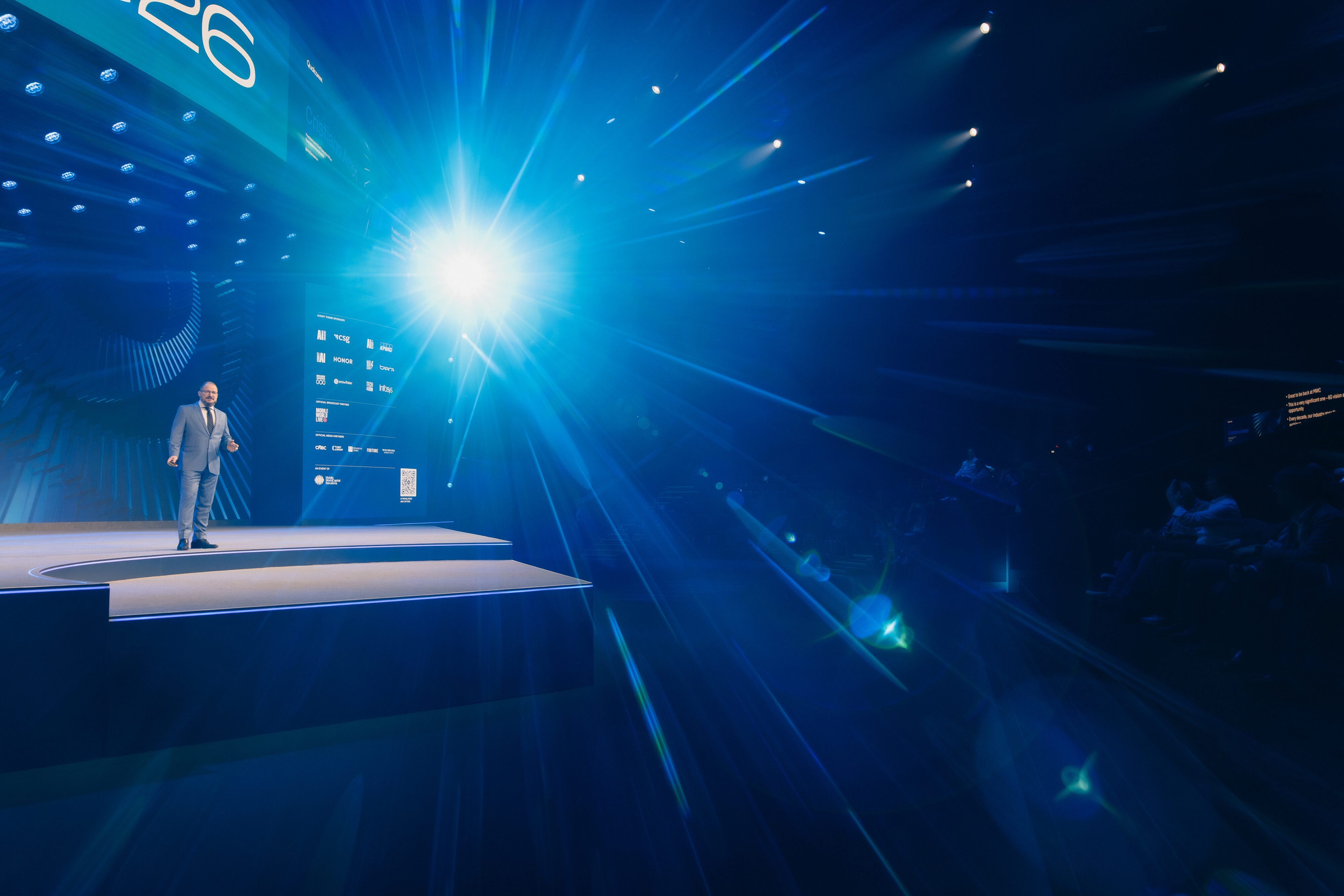
A standout moment on the main stage came during Keynote 9: Built for What’s Next, where Ralph Mupita, President and CEO of MTN Group, joined a conversation that cut to the heart of what the IQ Era means for Africa specifically.
Speaking alongside host Kamal Ahmed, Mupita was direct about MTN’s evolution: the company, which today serves 300 million customers across the continent, no longer sees itself purely as a telecoms operator. “We think the future is about platforms and ecosystems,” he said, outlining a strategy built around intelligent connectivity, fintech, and digital infrastructure including fiber, data centers, and tower assets.
On AI, Mupita was measured but clear. Rather than chasing the 6G narrative dominating parts of the show floor, he anchored his thinking in Africa’s reality. With 40% of MTN’s customer base still in the voice era and yet to experience the internet, the immediate priority remains bringing people into 4G and 5G connectivity, not the next generation. “4G to 5G is going to work with us for some time to come,” he said plainly.
But it was his closing remarks that drew the most attention. Mupita issued a pointed warning about the risk of a bifurcated world, divided between US-centric and Chinese approaches to AI and technology. For Africa and the broader global south, he argued, the answer lies in openness and common standards rather than digital sovereignty that ultimately excludes.

“We can’t get left behind in that race. And so to the policymakers, as we think about digital sovereignty, and there’s a place for that, I think we need to still keep an openness and common standards as the basis of how we drive this intelligence in the future. Otherwise, there’s a big risk for the global south to become the digital underclass. And that we must, that must seize us. And we must be motivated and focused to make sure that never happens.”
– Ralph Mupita, President and CEO, MTN Group
It was one of the most direct and consequential statements of the day, and a reminder that the stakes at MWC extend well beyond the exhibition floor.
In Other News: The Mobile Economy Report & Stories You Need to Know
Alongside the action on the show floor, MWC Barcelona 2026 served as the backdrop for the release of one of the industry’s most closely watched annual publications — the GSMA Mobile Economy Report. For Africa, the numbers tell a story of enormous potential and equally significant challenge.
The report projects that Africa will reach 382 million 5G connections by 2030, representing 21% of total mobile connections on the continent, the lowest regional 5G adoption rate globally, signalling a slower transition to next-generation networks compared to other regions. Perhaps more starkly, the continent accounts for 33% of the world’s unconnected population, despite global mobile broadband coverage reaching 96%. Smartphone ownership remains the lowest globally at just 24% of the population as of 2024. In Sub-Saharan Africa specifically, device affordability remains a stubborn barrier , entry-level smartphones cost the equivalent of 26% of monthly GDP per capita, nearly double the 16% average across other low- and middle-income countries. The data is a clear reminder that coverage alone does not equal connection, and that the path to digital inclusion runs through affordability, not just infrastructure.

This is where one of the day’s most significant Africa-specific announcements lands perfectly. The GSMA and the Handset Affordability Coalition announced that six African countries, the Democratic Republic of Congo, Ethiopia, Nigeria, Rwanda, Tanzania, and Uganda, have been selected for pilots to introduce affordable 4G smartphones priced at US$40. The move, formalised through a Memorandum of Understanding signed between the GSMA, a group of leading African operators, and OEM partners, builds on minimum device requirements first unveiled at MWC Kigali in 2025. It is one of the most concrete affordability commitments to come out of Barcelona this week, and a direct answer to the data the Mobile Economy Report lays bare.
Beyond the report, several other significant stories emerged from Barcelona on Tuesday.
The GSMA also released a position paper calling on policymakers to modernise regulatory frameworks as LEO satellite constellations reshape connectivity delivery, a move with direct relevance for Africa, where satellite is increasingly seen as a complement to terrestrial networks.
Huawei announced it has connected 170 million people in remote areas across more than 80 countries, exceeding its 2022 ITU pledge to reach 120 million by 2025.
On the AI governance front, The Africa AI Council held its first in-person meeting on the sidelines of MWC Barcelona, convened under the Smart Africa umbrella, to align on strategic priorities for AI development across the continent.

The Floor Doesn’t Sleep: What to Watch on Day Three
Day Three at MWC Barcelona 2026 promises to keep the momentum firmly alive. The exhibition floors will be in full swing, with more product showcases, partner announcements, and side events filling every corner of Fira Gran Via.
- Show Me the Money: The 5G Edition
09:30 – 10:30 CET | Marconi Stage, Hall 6
From network slicing and private 5G to edge computing, attendees will see how 5G is creating real-world impact across manufacturing, logistics, healthcare, and smart cities.
Session Speakers:
Soma Velayutham, Vice President, AI & Telecoms, NVIDIA | Anthony Goonetilleke, Group President Technology & Head of Strategy, Amdocs | Ankur Kapoor, EVP & Chief Network Officer, T-Mobile
- Data, Compute, Energy: The Power Equation of the AI Era
09:45 – 10:15 CET | Turing Stage, Hall 6
AI growth depends on balancing data, compute, and energy. This session examines breakthroughs in AI-specific chips, efficiency-focused models, and advanced cooling and system designs, exploring how telcos can turn these factors into competitive advantage.
Session Speakers:
Jessica Payne, Managing Director, The Raine Group | Hieu Le-Quang, CIO, Viettel Networks | Chris Bergey, EVP Edge AI, ARM Ltd.
- Keynote 10: Blueprints for the Intelligent Future
10:00 – 11:00 CET | MWC Main Stage, Hall 4
From AI-native devices and macro trends to the transformation of mobile networks, the session highlights the shifts that matter, showing how AI is enabling immersive, personalised experiences and unlocking new value across industries.
Speakers: Benedict Evans, Analyst & Author | Justin Hotard, President & CEO, Nokia
- Seeing Double: Digital Twins as the Smartest Bet for Business
11:00 – 11:30 CET | Turing Stage, Hall 6
Digital-twin technology is emerging as a strategic advantage for enterprises. This session explores how AI-powered digital twins simulate, monitor, and optimise physical assets, processes, and customer experiences.
Speakers: Subha Shrinivasan, Senior Vice President, Rakuten Symphony | Elena Fersman, VP & Head of AI Innovation, Ericsson | Leticia Latino Van Splunteren, CEO, Albireo AI | Priya Saxena, CTO AI & Cloud Services, Zinkworks
Exhibitor spotlights
NOKIA | 3B20
As networks evolve for an intelligent, data-driven world, Nokia is presenting solutions that demonstrate how high-performance connectivity and automation are shaping modern digital infrastructure. The focus is on technologies that help operators build secure, scalable, AI-ready networks for next-generation services.
From autonomous operations to programmable architectures, these solutions aim to reduce complexity while unlocking new business value. By integrating AI into network design and management, providers can strengthen performance, improve user experience, and adapt quickly to shifting demands.
At Hall 3, Stand #3B20, discover:
- High-performance secure networks built for the AI era
- Autonomous network capabilities that streamline operations
- Programmable architectures that unlock new revenue opportunities
- Scalable infrastructure designed for intelligent connectivity
MTN | 4E10.D
MTN will join global industry leaders, governments, and investors at MWC Barcelona 2026 to engage on the infrastructure, policy, and partnerships shaping the next phase of digital services. Convened by GSMA, the event marks its 20th Barcelona edition and remains a key forum for advancing connectivity and digital economies worldwide.
For the first time at the event, MTN will exhibit from its own stand, creating a dedicated space for dialogue on Africa’s digital and AI readiness. The group’s participation reflects its ongoing focus on resilient networks, expanded digital and financial services, and collaborative models that extend access and strengthen inclusion across its markets.
At Hall 4, stand 4E10.D, discover:
- Perspectives on infrastructure enabling scalable AI adoption
- Investment priorities for resilient and inclusive connectivity
- Fintech and digital platform innovation across Africa
- Partnership frameworks supporting long-term digital growth
Led by Group President and CEO Ralph Mupita, who also serves as Deputy Chair of the GSMA, MTN’s delegation will contribute to leadership discussions on responsible AI deployment, digital trust, and the systems required to support sustainable transformation in emerging markets.
AXIAN Telecom | 4E10.A
AXIAN Telecom brings a grounded, operational view of connectivity to MWC Barcelona 2026. The group operates across nine markets in Africa and the Indian Ocean, delivering mobile and fixed networks alongside digital infrastructure and mobile financial services through its subsidiaries and affiliates.
With a footprint spanning East, West, Central Africa, and island markets, AXIAN Telecom focuses on building and managing networks that respond to local market needs while supporting long-term digital growth. Its presence at MWC highlights practical approaches to network operations, infrastructure development, and service delivery across diverse environments.
At Hall 4, Stand 4E10.A, discover:
- Mobile and fixed network operations across multiple African markets
- Digital infrastructure supporting regional connectivity
- Mobile financial services integrated into telecom ecosystems
- Operational insights from a multi-market pan-African operator
Trustonic | 7B25Ex
Trustonic protects over 350 million smartphones worldwide, working with major Android OEMs and the Google Device Locking Program. Its Telecoms Platform unifies multiple locking technologies, helping carriers, retailers, and financiers safely manage device financing and reduce risk.
By supporting flexible payment models like digital micropayments and Buy Now Pay Later, Trustonic helps expand smartphone access while keeping devices secure. Remote lock and unlock commands are executed within seconds and resist common breach attempts, including software re-flashing and IMEI spoofing.
At Hall 7, Stand 7B25Ex, discover:
- Secure smartphone locking for financed devices
- Risk mitigation for carriers and retailers
- Remote lock/unlock via unified API
- Technology resilient to mass-market breaches
Stay tuned as we continue to bring you all the highlights, announcements, and showfloor news from MWC Barcelona 2026. The journey is only getting more exciting.