Apple Launches Unified Platform to Simplify Device Management and Business Operations
The platform brings together several of Apple’s existing business tools into a single, unified system that allows organizations to manage employee devices, deploy apps, and maintain secure operations while also expanding their ability to connect with customers across Apple services.
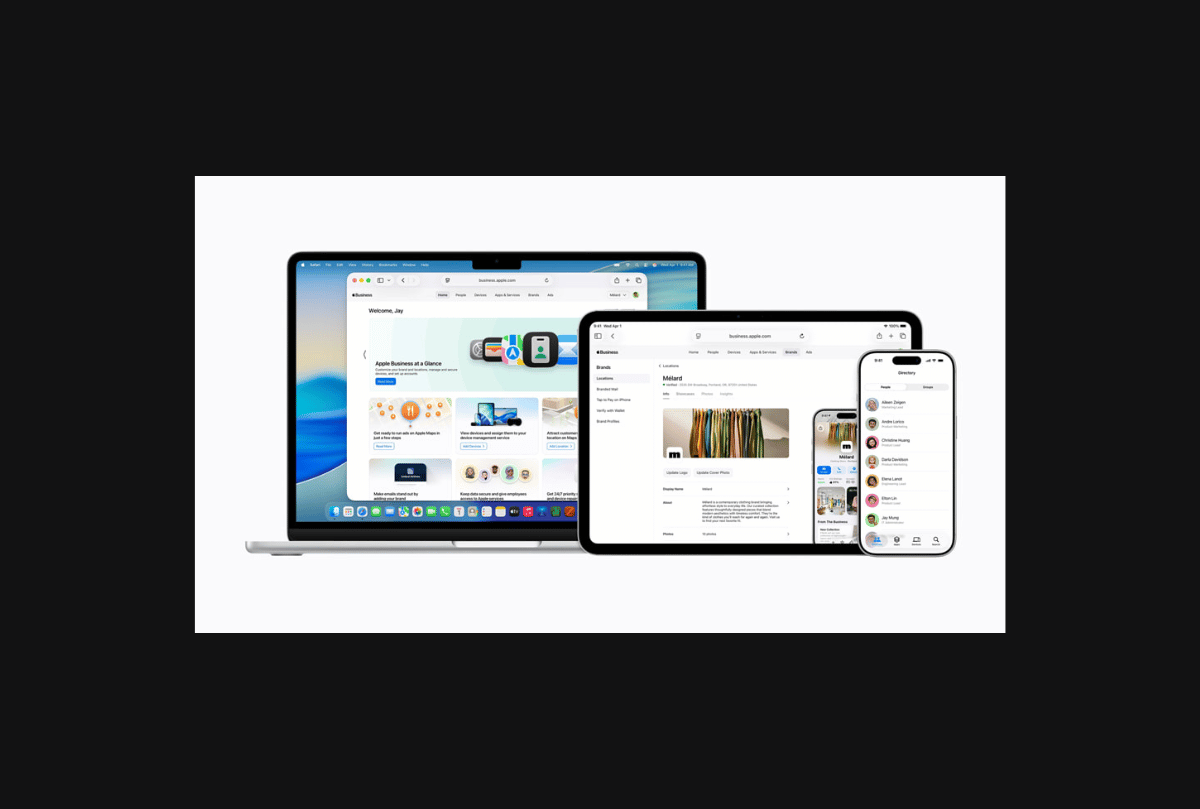
Apple has announced a new all-in-one platform called Apple Business, designed to help companies manage devices, improve productivity, and reach customers more effectively. The platform brings together several of Apple’s existing business tools into a single, unified system that allows organizations to manage employee devices, deploy apps, and maintain secure operations while also expanding their ability to connect with customers across Apple services.
A key feature of Apple Business is its built-in mobile device management (MDM), which enables businesses to control and configure devices, security settings, and apps from one central interface. Using tools like Blueprints, companies can quickly set up employee devices with preconfigured settings, supporting zero-touch deployment so that new devices are ready to use immediately. The platform also offers features such as Managed Apple Accounts, secure data separation between personal and work information, automated employee account creation, and integration with identity providers like Google Workspace and Microsoft Entra ID.
Apple Business also introduces integrated tools for communication and collaboration, including business email, calendar, and directory services that can be customized with a company’s own domain name. These features are designed to help businesses establish a professional identity while simplifying communication and coordination across teams. Additional tools allow organizations to create user groups, assign roles, distribute apps through the App Store, and access an Admin API for managing large-scale deployments.
To help businesses expand their reach, Apple Business will enhance visibility across Apple Maps, Mail, Wallet, and Siri. Starting this summer in the United States and Canada, businesses will be able to place local ads in Apple Maps, appearing during key search and discovery moments. These ads will be clearly marked and designed with Apple’s privacy-first approach, ensuring that user data remains secure and is not linked to personal accounts. Businesses must first claim their locations on Maps before accessing these advertising features.
The platform also centralizes brand and location management tools, allowing companies to control how their brand appears across Apple services. Businesses can manage logos, names, and key details, as well as create rich place cards with photos, business hours, and interactive features such as offers and reservation links. Insights tools will help companies track how customers interact with their listings, while branded communications in Mail, Wallet, and Tap to Pay on iPhone will enhance customer trust and visibility.
Apple Business will be available starting April 14 in more than 200 countries and regions as a free service. It will replace existing tools such as Apple Business Manager, Apple Business Essentials, and Apple Business Connect, with data from those services automatically migrating to the new platform. Additional services like enhanced iCloud storage and AppleCare+ for Business will also be available as paid add-ons, while the companion app and certain features will require the latest Apple operating systems.