Reflecting on 2025: A Year of Foregrounding Africa’s Digital Transformation
Through our lens at TechAfrica News, 2025 became the year of foregrounding issues in digital transformation. This meant deliberately bringing long-standing challenges to the centre of the conversation, rather than allowing them to sit quietly behind innovation narratives.

If 2025 were removed from Africa’s digital transformation journey, the gap would be impossible to ignore. It would mean erasing a year that brought some of the most consequential milestones, overdue course corrections, and honest conversations the sector has seen in recent times. Beyond launches, investments, and announcements, 2025 marked a moment of reckoning.
At the start of the year, Africa’s digital transformation stood at a familiar crossroads. Connectivity continued to expand, new technologies gained momentum, and ambition remained high. Yet many of the structural challenges that have long shaped the continent’s digital future persisted beneath the surface. Questions around access, affordability, infrastructure resilience, policy readiness, inclusion, and long-term sustainability were no longer peripheral. They demanded attention.
Through our lens at TechAfrica News, 2025 became the year of foregrounding issues in digital transformation. This meant deliberately bringing long-standing challenges to the centre of the conversation, rather than allowing them to sit quietly behind innovation narratives. It was about making certain realities impossible to ignore as digital transformation was planned, debated, and implemented across the continent.
While digital transformation discussions frequently gravitate toward tools, platforms, and technological breakthroughs, 2025 signalled a shift. The focus moved from technology-first narratives to impact-first thinking. Conversations increasingly asked not only what was being built, but for whom, under what conditions, and with what long-term consequences. This shift reflected a more thoughtful, responsible, and human-centred approach to Africa’s digital future.
This was not just another year of movement. It was a year that demanded clarity, accountability, and intention. Through our reporting, interviews, and on-the-ground coverage, we traced how the industry confronted its realities, recalibrated its priorities, and laid foundations for more meaningful progress.
This is what 2025 looked like through our lens, for us at TechAfrica News, and for the journey toward the Africa We Want.
The Defining Themes of 2025
Through our coverage, three defining themes consistently surfaced in 2025, revealing an industry recalibrating its priorities and confronting long-standing structural realities.
At the forefront was the race for last-mile connectivity. Satellite connectivity moved from promise to practice, gaining measurable adoption in hard-to-reach areas where traditional infrastructure remains costly or slow to deploy. SpaceX, for instance, has expanded its Starlink coverage to 26 African countries, including new markets such as São Tomé and Príncipe, reflecting a continental push to make satellite a primary connectivity option. At the same time, Mobile Network Operators intensified investment in terrestrial networks, particularly in rural and peri-urban regions. Notably, collaborations and partnerships emerged between major MNOs and satellite providers, with MTN in Zambia and South Sudan, Vodacom, and most recently Airtel Africa working alongside Starlink to find a middle ground that blends terrestrial density with satellite reach. Rather than competing, these complementary strategies underscored a shared urgency to make connectivity universal. In 2025, access stopped being a distant aspiration and became an immediate operational priority.
“Satellites aren’t here to replace terrestrial networks. They’re here to complement them, especially in remote regions and over water bodies where traditional infrastructure can’t reach.”
– Ralph Mupita, CEO and President, MTN Group
Another defining shift was the maturation of innovation conversations, particularly around artificial intelligence and financial services. As AI adoption accelerated, African policymakers and industry leaders pushed for governance frameworks rooted in local realities, prioritising inclusion, accountability, and relevance. In parallel, AI moved beyond abstraction into practical application, influencing creative industries, enterprise platforms, and everyday digital behaviour. At the same time, there was growing recognition that without deliberate intervention, AI could just as easily deepen inequality as advance inclusion, especially in a continent defined by linguistic and cultural diversity. This awareness drove coordinated efforts to develop African-led AI language models, with industry bodies like the GSMA, alongside operators, and technology partners collaborating to ensure local languages, data, and knowledge systems are represented in AI development, addressing long-standing gaps in data, compute, talent, and policy.
“Look, as minister, I see AI not just as artificial intelligence, but as a tool to advance inclusion. AI can stand for advancing inclusion or advancing inequality. It is up to us. The policies we put in place will either widen the digital gap or advance inclusion and close it, and that is how we want to use artificial intelligence.”
– Honorable Samuel Nartey George (MP), Minister for Communications, Digital Technology and Innovations, Ghana
Fintech followed a similar evolution. The year was marked less by rapid market entry and more by collaboration and consolidation, with partnerships addressing payment fragmentation and interoperability. Financial inclusion remained a central driver, closely tied to both connectivity expansion and investment strategies targeting underserved businesses and communities.
Underlying these developments was a renewed focus on foundations. Infrastructure discussions matured as 5G was increasingly positioned as an innovation platform rather than a consumer upgrade, while sustained investment in fibre, data centres, and backbone networks reflected the scale required to support future digital services. As coverage gaps narrowed, attention shifted to the growing usage gap, with affordability emerging as the most persistent barrier to adoption, prompting coordinated interventions such as industry-led efforts to lower the cost of entry-level 4G smartphones and policy moves in markets like South Africa to remove smartphone luxury taxes. Alongside this, governments took more deliberate steps to institutionalise digital transformation through policy, mandates, and public-sector digitisation, while digital safety and cybersecurity gained prominence as prerequisites for meaningful participation, particularly for women and young entrepreneurs.
“These are the partnerships we need now to ensure no one is left behind, moving from countries that have near-universal coverage with just a 1–2% gap to the wider ones. Leveraging these technologies can help bridge the coverage gap in the shortest possible time.”
– Angela Wamola, Head of Africa, GSMA
Digital safety and cybersecurity also gained prominence, recognised as prerequisites for meaningful participation, particularly for women and young entrepreneurs.
“The government’s role, therefore, should be to create a conducive environment that enables private sector investment, while also establishing clear guidance, safeguards, and regulations for the use of emerging technologies. It’s private sector-first when it comes to investment, and then the government steps in—particularly for universal connectivity.”
– Lacina Koné, CEO, Smart Africa
Taken together, these themes explain why 2025 was not just a year of momentum, but a year in which Africa’s digital transformation confronted its core assumptions and began rebuilding with greater intention.
From Headlines to Context: Growing Editorial Strength and Coverage
In 2025, we continued to strengthen our editorial approach by going beyond announcements to explain why developments mattered within Africa’s broader digital journey. While breaking news remained essential, our focus increasingly centred on context, analysis, and long-form insight that helped readers understand impact, trade-offs, and long-term implications. Complex topics such as policy, satellite integration, AI governance, fintech infrastructure, and digital public services were consistently unpacked in ways that connected policy decisions and commercial moves to real outcomes for economies, institutions, and communities.
As part of our effort to bring readers closer to the human side of Africa’s digital transformation, we launched the TechAfrica News Podcast in partnership with Smart Africa. The podcast was created to move beyond headlines and give leaders, experts, and changemakers space to speak directly, sharing perspectives, experience, and strategy in their own words.
The podcast concluded its first season in the summer, delivering nine episodes featuring guests from across Africa’s digital ecosystem. Now in its second season, the series has begun its next run with three new episodes, with more conversations scheduled and additional voices to be featured in the coming year.
Across both seasons, the podcast has hosted a diverse range of leaders, including Minister Solly Malatsi, South Africa’s Minister of Communications and Digital Technologies; Angela Wamola of the GSMA; Jorge Mendes, Chief Executive Officer of Cell C; Nitesh Singh, Managing Director for Communications, Media and Technology at Accenture; Roman Khalenkov, Chief Commercial Officer of PortaOne; Ralph Mupita, Group President and Chief Executive Officer of MTN; Lacina Koné, Chief Executive Officer of Smart Africa; Lyle Horsley, Head of Fintech at the South African Reserve Bank; Jean Philbert Nsengimana, Chief Digital Advisor at Africa CDC; Aliou Maiga, Regional Director for Financial Institutions Group at the IFC; Philip Besiimire, Chief Executive Officer of Vodacom Tanzania; and Dr Peter Ndegwa, Chief Executive Officer of Safaricom Group, among others. These conversations offered direct insight into how decision-makers are navigating regulation, infrastructure, innovation, and inclusion across the continent.
Alongside this, we significantly expanded our editorial scope. Through initiatives such as TechTalk Thursday, we published more than 42 opinion and analysis pieces that contributed to deeper dialogue around Africa’s digital transformation. We also launched Orbiting Innovations, in collaboration with SES and ST Engineering, to create a dedicated space for tracking and amplifying momentum across emerging technologies and infrastructure.
As an official media partner to some of the continent’s most influential industry gatherings and global platforms, including MWC Barcelona, GITEX Africa, IBC 2025, MVNO Nation Africa 2025, the Digital Africa Summit, MWC Kigali 2025, and AfricaCom 2025, and traveling across the globe, we extended our coverage beyond written reporting and into direct engagement from the show floor. Across these events, TechAfrica News recorded more than 45 video interviews with industry leaders, policymakers, and technology providers, ensuring conversations shaping Africa’s digital future were captured in real time and shared with a wider audience.
Being an official media partner of the Digital Africa Summit signaled our commitment to advancing TechAfrica News as a key platform and catalyst for change within the continent’s digital ecosystem. Launched this year by Invictus Global Media Group in partnership with GSMA, the Summit provided a platform to bring together policymakers, private sector leaders, and key stakeholders to align on the priorities that will shape Africa’s digital future. TechAfrica News has actively participated in the Summit across five countries, including Ghana, the Democratic Republic of Congo, Uganda, South Africa, and Senegal, capturing insights and engaging with industry leaders. We look forward to continuing this journey and expanding our involvement in the coming year.
We also went beyond reporting by actively participating in sessions, with our Chief Editor and Founder, Akim Benamara, moderating more than ten panel discussions across five major industry events including MWC Kigali, MVNO Nation, AfricaCom, Digital Africa Summit, and Gitex Africa. As our coverage evolved, so did our audience. In 2025, TechAfrica News grew its LinkedIn community to over 29,000 followers while continuing to engage millions of readers across our platforms, reinforcing our role as a trusted source of insight, context, and connection within Africa’s digital ecosystem.
“At TechAfrica News, we understand that information is more than news—it is the foundation for informed action. Capturing, explaining, and amplifying the stories of Africa’s digital transformation allows industry leaders, policymakers, and communities to make decisions that truly matter. We will continue to expand this work meaningfully, ensuring every development is accessible, contextualised, and impactful.”
– Akim Benamara, Chief Editor and Founder, TechAfrica News
These milestones reflect a deep commitment to an industry and a digital Africa that is truly our own, rooted in the belief that a sector thrives only when those shaping it are fully informed and actively involved, and that knowledge and dialogue remain central to sustainable growth and inclusive innovation.
“We are proud of the growth we have achieved and the expansion of our coverage across Africa’s digital ecosystem. Yet we know there is still room to grow. We will continue to expand meaningfully, ensuring that every story, insight, and milestone reaches the audiences who need it most.”
– Joyce Onyeagoro, Senior Editor, TechAfrica News
What 2025 Changed and Signals for 2026
2025 was a year of both tangible progress and stark clarity. The year proved that when policy, private sector, and civil society align, digital transformation can accelerate meaningfully.
In short, 2025 solved some pressing problems but made it impossible to ignore the structural gaps that remain, particularly around inclusive access, localised innovation, and the human-centred delivery of digital services.
If 2025 was a year of recognition, alignment, and laying foundations, 2026 will demand action and acceleration. Signals emerging from the year point to areas where focus must deepen: closing the usage gap through affordability and digital literacy, embedding African voices in AI and innovation, and ensuring that infrastructure investments are matched by inclusive service delivery.
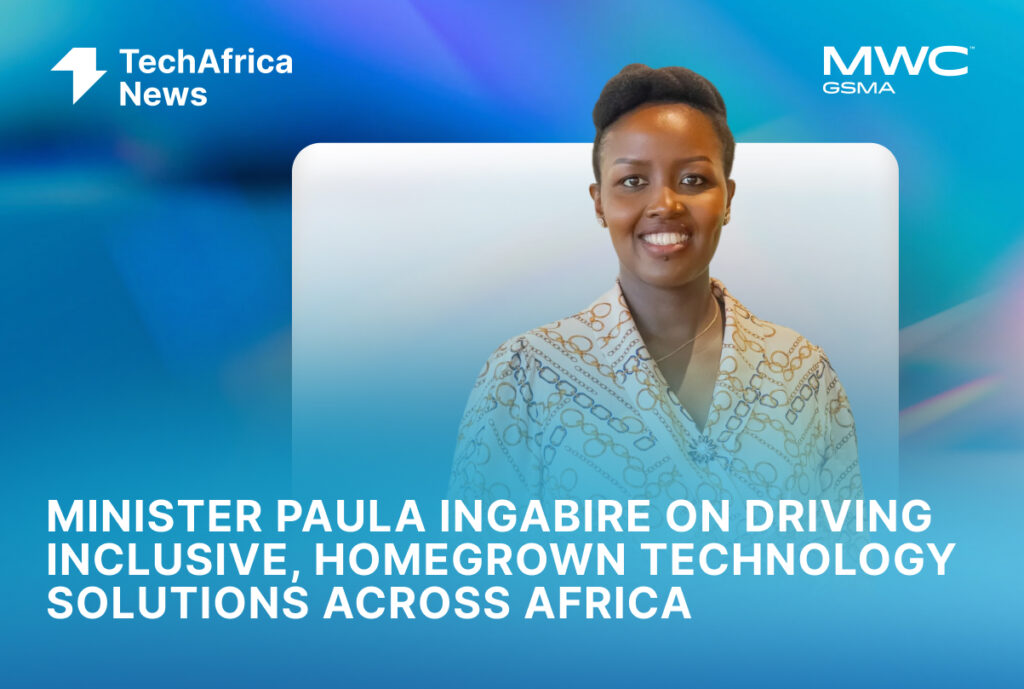
“Now, we do not necessarily wait for a perfect environment where you have the right regulations or the funding required to get things done. Even with the constraints that we may have, we still are able to find ways where technology is able to support us.”
– Honorable Minister Paula Ingabire, Minister of ICT and Innovation, Rwanda
Policymakers, operators, and innovators will need to work in concert to translate ambitious strategies into practical outcomes that reach every community, not just the connected few. Progress cannot wait for perfect conditions—measured, decisive action must be taken now, with learning and adaptation built into the process.
“If we all recognize that this is the goal we share, that’s when things start happening. That’s when we understand that we can bring investments together and all benefit from it. We can build infrastructure together and work towards providing more services to customers.”
– Ayman Essam, Chief External Affairs Officer, Vodacom Group
From our lens, the holistic view is clear: Africa’s digital transformation must continue to balance technology deployment with human-centred design, policy coherence, and ecosystem collaboration. The foundations are now visible; the task for 2026 is to build on them decisively, ensuring that the digital Africa we envision, connected, inclusive, and empowered —moves from aspiration to reality.